

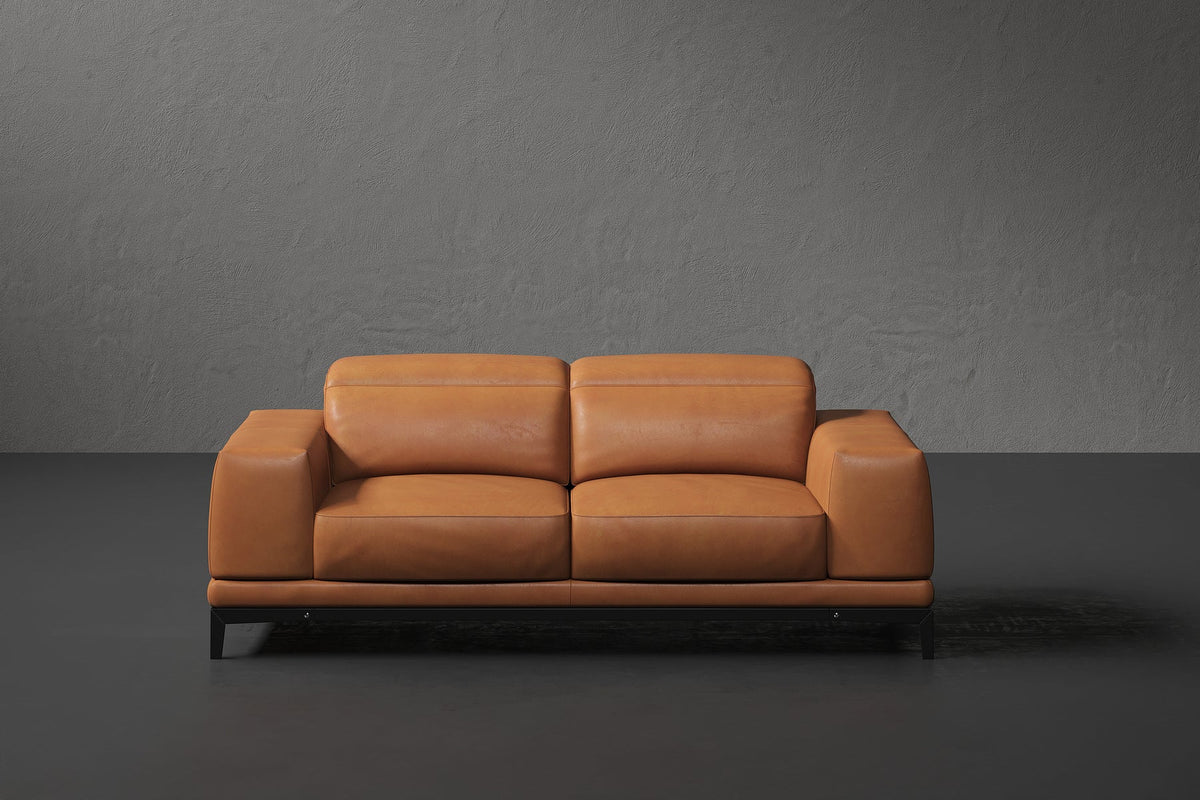
A loveseat is a small commitment with an outsized job: it usually sits in a spot that gets constant use — a den, a home office, a secondary seating area — and it has to earn that spot without the breathing room a full sofa gets. That combination of high use and limited scale is exactly why material choice matters so much on a loveseat, and it's a big part of why leather is such a strong fit for this particular piece of furniture. This guide focuses specifically on leather as a material for a loveseat: why it holds up, where a leather loveseat works best, and what to actually check before buying one.
Why Leather Is a Strong Material Choice for a Loveseat Specifically
Durability in a Smaller, High-Use Piece
A loveseat often ends up in the highest-traffic seat in a house, precisely because of its size — it's the chair-that-seats-two in a home office, the extra seat in a den that gets used every evening, or the spot by a window that becomes someone's go-to. That concentrated use is hard on fabric, which can crush, pill, or show wear patterns in the seat cushions faster than people expect. Leather handles concentrated, repeated use differently: it doesn't pill, it resists the kind of visible wear patterns that flatten fabric pile, and it holds its shape under frequent sitting and rising. On a piece that's going to be sat on constantly rather than occasionally, that durability difference compounds over years.
How Leather Ages
This is one of the most practical advantages leather has over fabric on a smaller, heavily used piece: it ages by developing a softened, slightly burnished character rather than by visibly wearing out. A fabric loveseat used daily for several years often starts to look tired — matted pile, faded high-contact areas, a general softness that reads as worn rather than settled. Leather used the same way tends to develop a gentle patina instead, particularly at the arms and seat where hands and weight make the most contact, and most people find that look appealing rather than a sign the piece needs replacing. That's a meaningful difference on a loveseat, which by nature of its size gets more concentrated contact per square foot than a larger sofa.
Cleaning Ease
Because a loveseat frequently does double duty as an everyday seat — morning coffee, a lunch break at the home office, kids or pets passing through — day-to-day spills and marks are a real consideration. Leather is simple to wipe down with a slightly damp cloth for most everyday marks, without the deeper cleaning or professional treatment that a spill can require on fabric upholstery. That ease of maintenance matters more, not less, on a smaller piece that's in constant rotation.
Style Versatility
Leather also does a lot of styling work on a small piece of furniture. A loveseat has less surface area than a sofa to make a visual statement, and leather's clean, substantial look reads as intentional and grounded even in a compact footprint — it doesn't need a pattern or a particular color story to feel finished the way some fabrics do. That makes a leather loveseat easier to place in a room that already has other, larger pieces with their own personality, since leather tends to complement rather than compete.
The Brun Leather Sofa with Adjustable Headrest is available in a 74-inch loveseat-length configuration, which is a useful example of a compact-format leather piece built with the same details — including the adjustable headrest — as its larger sofa counterpart.

Shown: Brun Leather Sofa with Adjustable Headrest
Where a Leather Loveseat Works Best
A leather loveseat tends to earn its keep in a handful of specific spots. In a den, it's often the everyday seat rather than the occasional-guest seat, which plays directly to leather's durability advantage. In a home office, a loveseat gives a spot for a quick call, a reading break, or a second person to sit without dedicating the square footage a full sofa would need — and leather's easy cleanup matters here too, given how much daily contact a home-office seat gets. As secondary living room seating, a loveseat rounds out a seating group without duplicating the main sofa, often positioned perpendicular to it or facing it across a coffee table. And paired with a sectional, a loveseat can add flexible extra seating for a larger gathering while still functioning as a smaller, standalone piece the rest of the time — useful in a room that needs to flex between an everyday footprint and an occasional larger one.
The Vidal Leather Sofa is a good reference point for how the same design language scales between a full sofa and a smaller-format piece, and it's worth looking at directly alongside a loveseat-length option to compare proportions for your space.

Shown: Vidal Leather Sofa
What to Check When Buying a Leather Loveseat
Grain Quality
Leather grade affects how a loveseat looks and wears over time. Leather that retains more of its natural grain tends to age with more character and stays supple longer, while heavily corrected or thickly coated leather can look more uniform out of the box but is more prone to visible wear at high-contact points over time. Ask what grade of leather is used, and where on the piece it's applied, since many manufacturers reserve the higher grade for the seating surfaces that see the most contact.
Frame Construction
A loveseat's frame does the same structural job as a larger sofa's frame but in a smaller footprint, which means every joint and support point matters proportionally more. A solid, well-built frame is the single biggest factor in whether a loveseat holds its shape and stays quiet (no creaking) after years of regular use. This is harder to evaluate from a listing alone, but weight, joinery description, and warranty terms are reasonable proxies for construction quality.
Cushion Fill
Cushion fill affects both immediate comfort and how the loveseat holds up over time. Higher-density foam, sometimes wrapped in down or a down-alternative fiber, tends to hold its shape better under repeated daily use than lower-density foam alone, which can flatten and lose support faster on a piece that's sat on constantly. Given how much use a loveseat typically gets relative to its size, cushion fill quality is worth asking about directly rather than assuming.
Frequently Asked Questions
Why is leather a good choice specifically for a loveseat rather than a full sofa?
A loveseat often sees more concentrated, everyday use per square foot than a larger sofa, since it's frequently the go-to seat in a den, home office, or secondary living area. Leather holds up better than fabric under that kind of repeated contact — it resists pilling and visible wear patterns, ages by developing character rather than looking worn out, and wipes clean easily, all of which matter more on a smaller piece in constant rotation.
Where does a leather loveseat work best in a home?
Common spots include a den (as the everyday seat), a home office (for calls, breaks, or a second seat without using much floor space), as secondary seating in a living room alongside a main sofa, and paired with a sectional to add flexible extra seating for larger gatherings.
What should I check before buying a leather loveseat?
Three things matter most: the grain quality of the leather (more natural grain generally ages better and stays more supple), the frame construction (a solid frame matters proportionally more on a smaller piece), and the cushion fill (higher-density foam holds its shape better under the frequent use a loveseat typically gets).
Does a leather loveseat need more maintenance than a fabric one?
No — if anything, day-to-day maintenance is simpler. Leather can be wiped down with a slightly damp cloth for most everyday marks, without the deeper cleaning fabric upholstery often needs after a spill. Periodic conditioning keeps the leather supple over the long term, but routine care is straightforward.
Shop This Post
A leather loveseat is a small piece that carries a lot of daily use, and choosing the right one pays off for years. Browse Finn & Form's loveseat collection to find the right fit for your space.


