

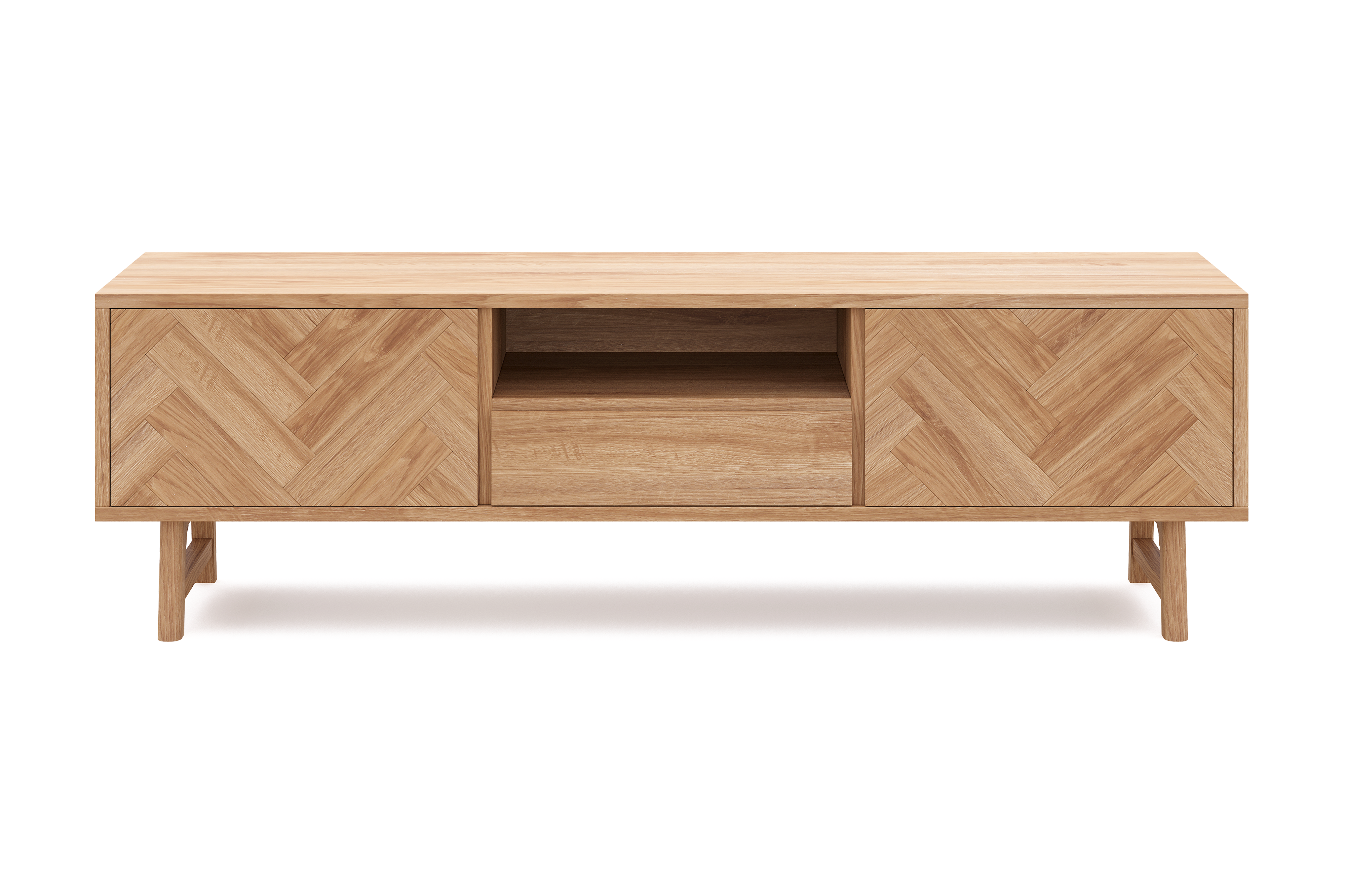
A media console has a strange job compared to most living room furniture: it needs to disappear when the TV is on and hold its own when it's off. Get the sizing, storage, and styling right, and it reads as a considered piece of furniture. Get it wrong, and it becomes a shelf for tangled cables and a TV that looks like it's floating on top of something too small for it. Here's how to think through the choices that actually matter.
Size the Console to Your TV and Wall — Not Just the Room
The single most common mistake in media console shopping is sizing the console to the room instead of the television. A helpful rule of thumb is to choose a console that's roughly the same width as your TV or a bit wider — somewhere in the range of 1.25 to 1.5 times the TV's width tends to look balanced. Go much narrower than that and the TV visually overhangs the furniture beneath it, which reads as unstable even when it isn't. Go dramatically wider and the console can start to overwhelm the wall, especially in a smaller room.
It's also worth measuring the wall itself, not just picturing it. A console that looks reasonably sized in a showroom or product photo can feel very different against your actual wall length, especially if there's a window, doorway, or fireplace competing for that same stretch of wall.
Plan for Cable Management Before You Need To
Cable management is one of those things almost nobody thinks about until the TV, streaming box, gaming console, and soundbar are all sitting on top of a console with a tangle of cords running down the back. Consoles with back panel cutouts, or fully open backs, make an enormous difference here — they let you route cables straight down and out of sight instead of routing them around a solid back panel or letting them hang loose behind the piece. If you're someone who regularly adds or swaps devices, an open-backed or cutout design is worth prioritizing over a completely enclosed one, even if the enclosed version looks slightly cleaner in photos.

Shown: Grange Oak Wood Media Console
Balance Closed Storage With Open Display
The most livable media consoles do two jobs at once: they hide the stuff you don't want to look at, and they give you a small amount of space to display the stuff you do. Closed cabinet doors or drawers are the right home for remotes, cables, game controllers, and media clutter — anything that would otherwise sit out in plain sight. Open shelving or the top surface, by contrast, is where a console gets to look intentional: a single lamp, a plant, a piece of art leaned rather than hung. The goal isn't to fill every surface, it's to give yourself somewhere to hide the clutter so the display surfaces can stay genuinely curated.
Choose a Material That Can Take Daily Use
A media console gets touched, bumped, and used more than almost any other piece in a living room — remotes get set down, kids lean on it, cables get plugged and unplugged. Solid oak and other solid woods tend to be a smart choice here specifically because they ground a room visually while also hiding the small dings and daily wear that come with constant use far better than a high-gloss lacquer or a delicate veneer would. A warm wood tone also does double duty as a grounding element in a room where the TV itself is a large black rectangle that can otherwise feel cold.

Shown: Beaufort Oak Wood Media Console
Style the Top Without Turning It Into a Catch-All
The top of a media console has the same problem as a coffee table: it's a flat, convenient surface, which means it's constantly at risk of becoming a landing spot for mail, remotes, and whatever else needs somewhere to go. The fix is the same as it is for a coffee table — keep the arrangement small and edited rather than trying to fill the whole surface. A lamp on one side, a low bowl or a small stack of books, maybe a single plant, is enough to make the piece feel styled without giving it so much surface area that it invites clutter. If you find remotes and cords are winning the battle for that top surface, that's usually a sign the closed storage underneath isn't being used enough — a good console gives those items a proper home so the top can stay clear.
Matching the Console to the Room's Layout
Where a console sits relative to seating matters almost as much as its size. If the sofa or sectional is set well back from the wall, a console that reads as too low or too shallow can look lost in the gap. A console with some visual weight — a substantial wood grain, a solid base rather than thin tapered legs — tends to hold its own better across a longer sightline. In smaller rooms, where the console might be only a few feet from the seating, a lighter profile with visible legs can help the piece feel less bulky and keep the floor sightline open, which makes the whole room read as more spacious.
Bringing It Together
A media console that's sized correctly, has real cable management, and balances closed storage with a few well-chosen display objects will do far more for a room than a piece chosen on looks alone. It's a piece of furniture that earns its keep every single day, which makes it worth getting the fundamentals right the first time.
Frequently Asked Questions
How wide should a media console be compared to my TV?
A helpful rule of thumb is to choose a console roughly 1.25 to 1.5 times the width of the TV. Going much narrower makes the TV visually overhang the console, while going dramatically wider can overwhelm the wall in a smaller room.
What should I look for to manage cables?
Look for a console with back panel cutouts or a fully open back, which let you route cables straight down and out of sight instead of letting them tangle or hang loose behind the piece.
Why is solid wood a good material for a media console?
A media console gets touched, bumped, and used constantly, and solid woods like oak hide small dings and daily wear far better than a high-gloss lacquer or delicate veneer, while also grounding the room visually.
How should I style the top of a media console without it becoming cluttered?
Keep the arrangement small and edited: a lamp on one side, a low bowl or small stack of books, maybe a single plant. If remotes and cords keep winning the surface, it's usually a sign the closed storage underneath isn't being used enough.
Shop This Post
Explore Finn & Form's Grange and Beaufort oak wood media consoles to find a piece sized and built for how your living room actually gets used.


