

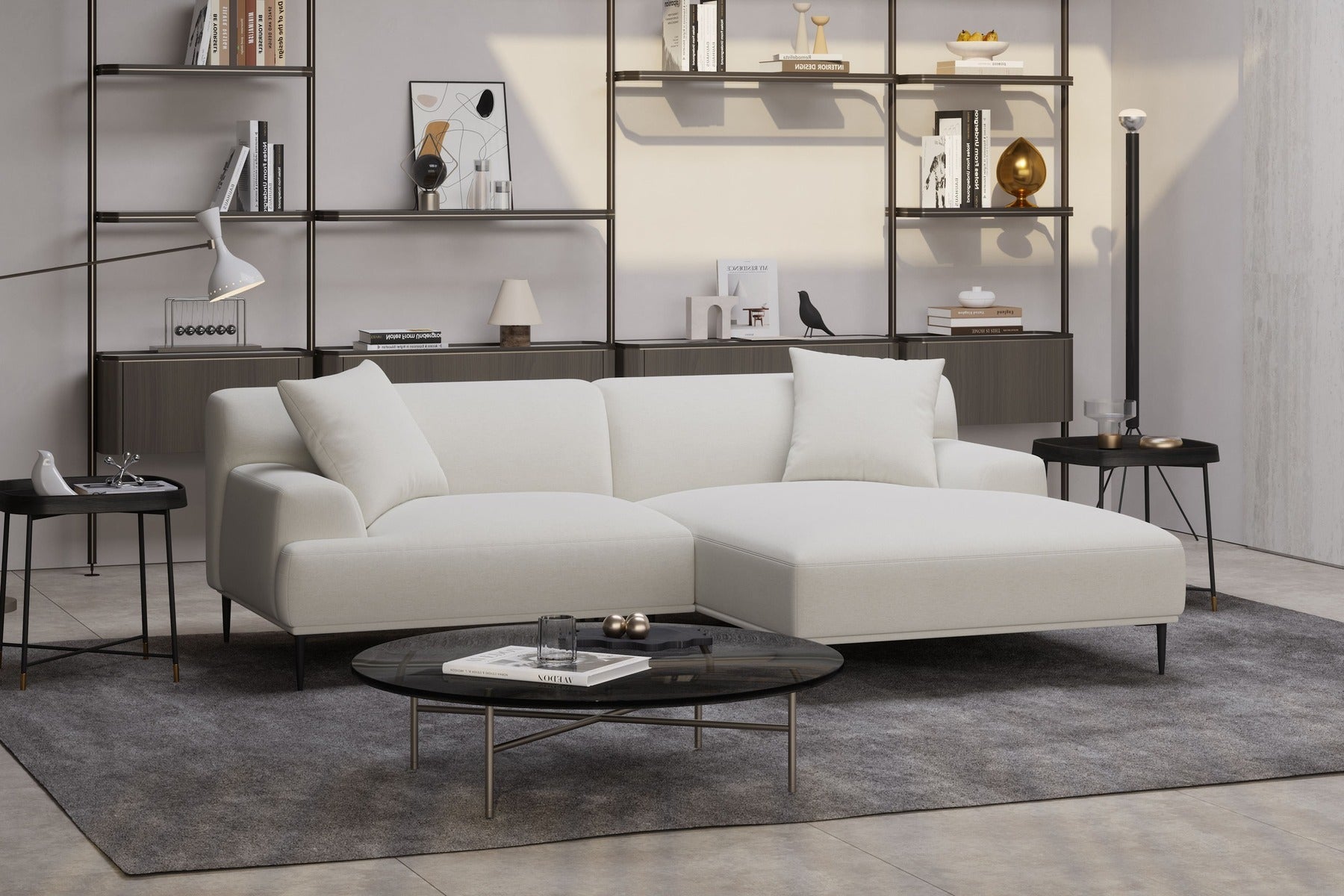
The assumption that a small apartment can't fit a sectional sofa is one of the most common furniture-shopping myths out there, and it's usually backwards. A well-scaled sectional sofa for a small apartment can actually use the space more efficiently than two separate pieces — a sofa plus an armchair, say — because it claims a single footprint instead of two, and it can be shaped to work with the room's layout rather than fighting it. Here's how to choose one that genuinely fits.
Why a Sectional Can Work Harder Than Separate Pieces
In a small living room, corners are almost always underused. A standalone sofa and chair combination typically floats in the middle of the room or lines up along one wall, leaving the corners as dead space that's awkward to furnish and easy to ignore. A sectional with a corner-hugging chaise does the opposite: it tucks its longest arm directly into the corner, using that otherwise-wasted square footage as functional seating instead of empty floor.
One Footprint Instead of Two
Because a sectional is one connected piece, it also avoids the visual clutter of navigating around multiple furniture legs and gaps that separate pieces create. A small room reads as more open when there's a single, continuous line of seating along one side, rather than several smaller items scattered with sightlines broken up between them.
Measure Before You Buy — Including the Path There
This is the step that causes the most regret after a sectional purchase, and it has nothing to do with the couch fitting the room. It has to do with the couch fitting through the door.
Measure the Final Placement First
Start with the basics: measure the wall length and depth where the sectional will sit, and make sure there's still walking clearance — ideally at least 30 inches — between the sectional and any coffee table, TV console, or walkway through the room. It's easy to size a sectional to the empty floor plan and forget that people still need to move around it once it's in place.
Then Measure Every Doorway, Hallway, and Stairwell
Before you finalize an order, measure every doorway, hallway turn, elevator interior, and stairwell the sectional will need to pass through to reach its final spot — not just the front door width, but the tightest turn along the entire route. Many sectionals ship in separate sections specifically so each piece can be maneuvered through tighter apartment doorways individually, but it's still worth confirming the dimensions of each section against your building's actual access points before ordering, especially in older buildings with narrow stairwells or tight hallway turns.
Choose a Lower-Profile or Reversible Chaise
Two design details make an outsized difference in how "big" a sectional feels in a small room: arm height and chaise flexibility.
Lower-Profile Arms and Backs
A sectional with a lower back and slimmer arms takes up less visual height, which keeps sightlines open across the room and prevents the piece from dominating a smaller space the way a tall, boxy silhouette can. This matters more in a small apartment than it would in a larger living room, where a taller-profile sofa has more surrounding space to balance against.
Reversible Chaise for Layout Flexibility
A reversible or modular chaise configuration means the sectional isn't locked into one specific room layout. If you move apartments, or simply want to try the piece against a different wall, a reversible chaise can switch sides without buying new furniture — a genuinely practical feature for anyone renting or expecting to move again within a few years.

Shown: Rodin 94.5" Fabric Sectional Sofa
Color and Fabric Choices That Keep a Small Room Open
Beyond dimensions, the color and material of a sectional sofa affects how large a small room feels once it's furnished.
Lighter Tones Read as More Open
A lighter fabric or leather tone — cream, taupe, light grey — reflects more light and creates less visual weight than a dark saturated color, which helps a small room feel less closed-in. This doesn't mean a dark sectional can't work in a small apartment, but it's worth being intentional about it: a deep charcoal or black sectional will read as a much heavier visual anchor in a compact room than the same silhouette in a lighter shade.
Avoid Bulky, Heavily Textured Upholstery
A smooth leather or a tightly woven performance fabric tends to keep a sectional looking sleeker and less visually heavy than a deeply textured, high-pile fabric, which can make the same piece of furniture look bulkier than its actual dimensions. In a small apartment, that visual weight matters — a leather sectional with clean lines can make a corner feel considered rather than crowded.

Shown: Maestro Leather Corner Sectional Sofa
Frequently Asked Questions
Can a sectional sofa actually fit in a small apartment?
Yes. A well-scaled sectional can use space more efficiently than separate pieces because it claims one footprint and can tuck a chaise into an otherwise-wasted corner.
What should I measure before buying a sectional?
Measure the wall length and depth for final placement with at least 30 inches of walking clearance, and separately measure every doorway, hallway turn, elevator, and stairwell the sectional needs to pass through to reach that spot.
Does arm height matter in a small room?
Yes. A sectional with a lower back and slimmer arms takes up less visual height, keeping sightlines open and preventing the piece from dominating a smaller space.
What color and fabric choices keep a small room feeling open?
Lighter tones like cream, taupe, or light grey reflect more light and read as less heavy than dark saturated colors, and smooth leather or tightly woven fabric looks sleeker than deeply textured, high-pile upholstery.
Shop This Post
Putting It Together
A sectional sofa isn't automatically off-limits in a small apartment — in many layouts, it's actually the smarter choice, since it can put a wasted corner to work and avoid the visual clutter of multiple separate pieces. The keys are measuring carefully (both the final spot and the path there), choosing a lower-profile or reversible design, and picking a color and fabric that keep the room feeling open rather than boxed in.
To find a sectional scaled to your space, browse our full range of sectional sofas, including corner and reversible-chaise configurations built with smaller floor plans in mind.


