

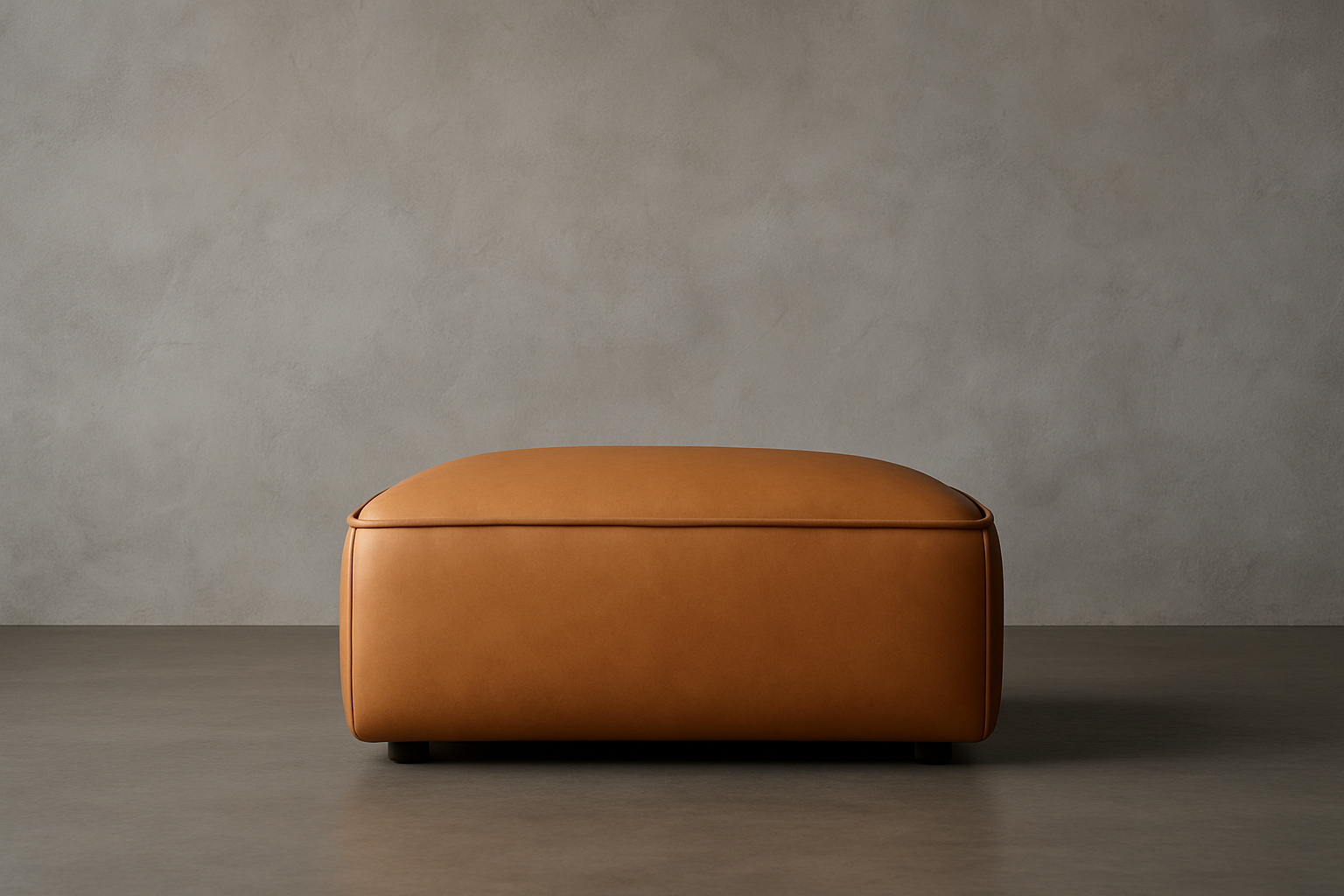
A storage ottoman is one of those pieces of furniture that looks simple on the surface but quietly earns its place in a room by doing more jobs than almost anything else you own. It's a footrest, extra seating, a surface for a tray, and hidden storage all in one, which makes it one of the more useful pieces you can add to a living room, bedroom, or entryway. Here's how to think about using one well.
The Core Appeal: One Piece, Several Jobs
Most furniture is built to do one thing. An ottoman is built to do several, depending on the moment:
- Footrest — the most obvious use, propping your feet up after a long day.
- Extra seating — when guests are over and the sofa runs out of room, an ottoman can quietly become another seat.
- An impromptu surface — set a tray on top and it becomes a spot for coffee, drinks, or a laptop, without needing a separate side table.
- Hidden storage — the part that sets a storage ottoman apart from a plain footstool: space underneath the lid or inside the frame for things you want accessible but out of sight.
What Actually Goes Inside
The storage compartment is only as useful as what you put in it, and in practice, a few categories of items tend to work best: throw blankets and extra pillows that you want within reach but don't need out on display every day, remotes and small electronics that would otherwise clutter a coffee table, board games and puzzles for households that keep them in the living room, and seasonal items — a heavier blanket in summer, a lighter throw in winter — that you're rotating in and out anyway. The common thread is that storage ottomans work best for things you use often enough to want nearby, but not often enough to want sitting out.

Shown: Allodi Full-Aniline Leather Ottoman
Sizing an Ottoman to Your Room
Getting the size right matters more than it might seem. If you already have a coffee table and want the ottoman to sit alongside it, a helpful guideline is to keep the ottoman at roughly two-thirds the size of the coffee table, so it reads as a complementary piece rather than competing for the same visual role. If you're using the ottoman as a coffee table replacement instead — a common choice in smaller living rooms, or in households with young kids where a hard-edged coffee table isn't ideal — size it the way you would size a coffee table: proportional to the sofa in front of it, with enough clearance around it to walk past comfortably.
Material Considerations
Because an ottoman gets used as a footrest and an occasional extra seat, it takes more direct contact than a lot of other furniture in the room. Leather holds up especially well here: it wipes clean easily if a shoe brushes against it or a drink spills nearby, and rather than showing wear the way fabric does, leather tends to develop a soft patina over time that most people find only adds to its character. For a piece that's going to be touched, sat on, and used as a footrest daily, that combination of easy care and graceful aging makes leather a practical choice, not just an aesthetic one.

Shown: Aria Leather Lounge Chair & Ottoman
Where an Ottoman Actually Works Well
A few placements consistently make the most of what an ottoman offers. In front of a sofa, it can stand in for a coffee table while adding softer, more casual seating to the room. At the foot of a bed, it gives you a place to sit while getting dressed or putting on shoes, without needing a full bench. In an entryway, a smaller ottoman offers exactly the same benefit — a spot to sit while putting shoes on or off — while doubling as extra seating if guests are waiting near the door. In each case, the ottoman is filling a real, specific need in that spot, rather than just sitting there as decoration.
Style Pairings Worth Considering
An ottoman does not need to match its neighboring sofa or chair exactly to look right. A leather ottoman can sit comfortably in front of a fabric sectional, adding a bit of textural contrast rather than blending in completely. If the ottoman is doing double duty as extra seating for guests, a neutral tone that works with more than one room palette gives you more flexibility than a bold color that only pairs with one specific look. And if the ottoman is paired with its own matching lounge chair, letting that pair stand slightly apart from the rest of the room, as its own little seating moment, tends to read as more intentional than trying to blend it into everything else.
Choosing the Right One for Your Space
Whether you're pairing an ottoman with a lounge chair, using one as a coffee table stand-in, or adding one purely for the hidden storage, the right choice comes down to matching the size to its role and choosing a material that can handle how it'll actually be used. A leather ottoman built for daily contact will outlast one chosen for looks alone.
Frequently Asked Questions
What can you store inside a storage ottoman?
Items you use often enough to want nearby but not out on display, such as throw blankets and extra pillows, remotes and small electronics, board games and puzzles, and seasonal items like an extra blanket that gets rotated in and out.
How big should a storage ottoman be next to a coffee table?
A helpful guideline is to keep the ottoman at roughly two-thirds the size of the coffee table, so it reads as a complementary piece rather than competing with it for the same visual role.
Why is leather a good material for a storage ottoman?
An ottoman gets used as a footrest and occasional extra seat, so it takes a lot of direct contact. Leather wipes clean easily and develops a soft patina over time instead of showing wear the way fabric does, making it a practical daily-use choice.
Does a storage ottoman need to match the sofa or chair next to it?
No. A leather ottoman can sit comfortably in front of a fabric sectional for textural contrast, and a neutral tone gives more flexibility than a bold color that only pairs with one specific look.
Shop This Post
Browse Finn & Form's Allodi Leather Ottoman and Aria Leather Lounge Chair & Ottoman, or explore the full Finn & Form collection for a piece sized and built for the way your room actually gets used.


