

There's a reason stone furniture keeps showing up in the homes of people who care about design: it brings a kind of quiet permanence that few other materials can match. A well-made stone table isn't just a surface — it's a statement piece, and one that's built to be functional for decades rather than seasons. Here's what actually makes luxury stone tables worth the investment, and how to choose and care for one well.
Marble vs. Quartz: Understanding Your Options
The two materials you'll encounter most often in luxury stone tables are marble and engineered quartz, and each brings something different to the table (literally).
Marble is a natural stone prized for its distinctive veining — no two slabs are exactly alike, which means a marble tabletop is genuinely one of a kind. It has a classic, timeless quality that pairs beautifully with both traditional and contemporary interiors. Because it's a natural, porous material, marble does require a bit more upkeep to keep it looking its best over time.
Quartz is an engineered material, typically combining natural quartz with resins to create a non-porous surface that resists staining and scratching far more easily than marble. It offers a more consistent, uniform look and a considerably lower-maintenance ownership experience — a smart choice for busy households or anyone who wants the stone aesthetic without the extra care routine.

The Kaplan Simplicity Carrara Marble Coffee Table showcases the natural veining that makes every marble piece one of a kind.
Styling: Classic Elegance vs. Modern Minimalism
One of the best things about luxury stone furniture is how versatile it is across design styles.
For a classic, elegant look, pair a marble table with warm wood tones, brass or gold accents, and richly upholstered seating. The natural veining in marble reads as timeless rather than trendy, which is exactly why it continues to be a favorite in more traditional and transitional interiors.
For a modern minimalist space, a clean-lined quartz table with a monochromatic palette and simple, uncluttered surroundings lets the material itself be the focal point. Pair it with sleek metal or wood legs and let the negative space around it do the work.

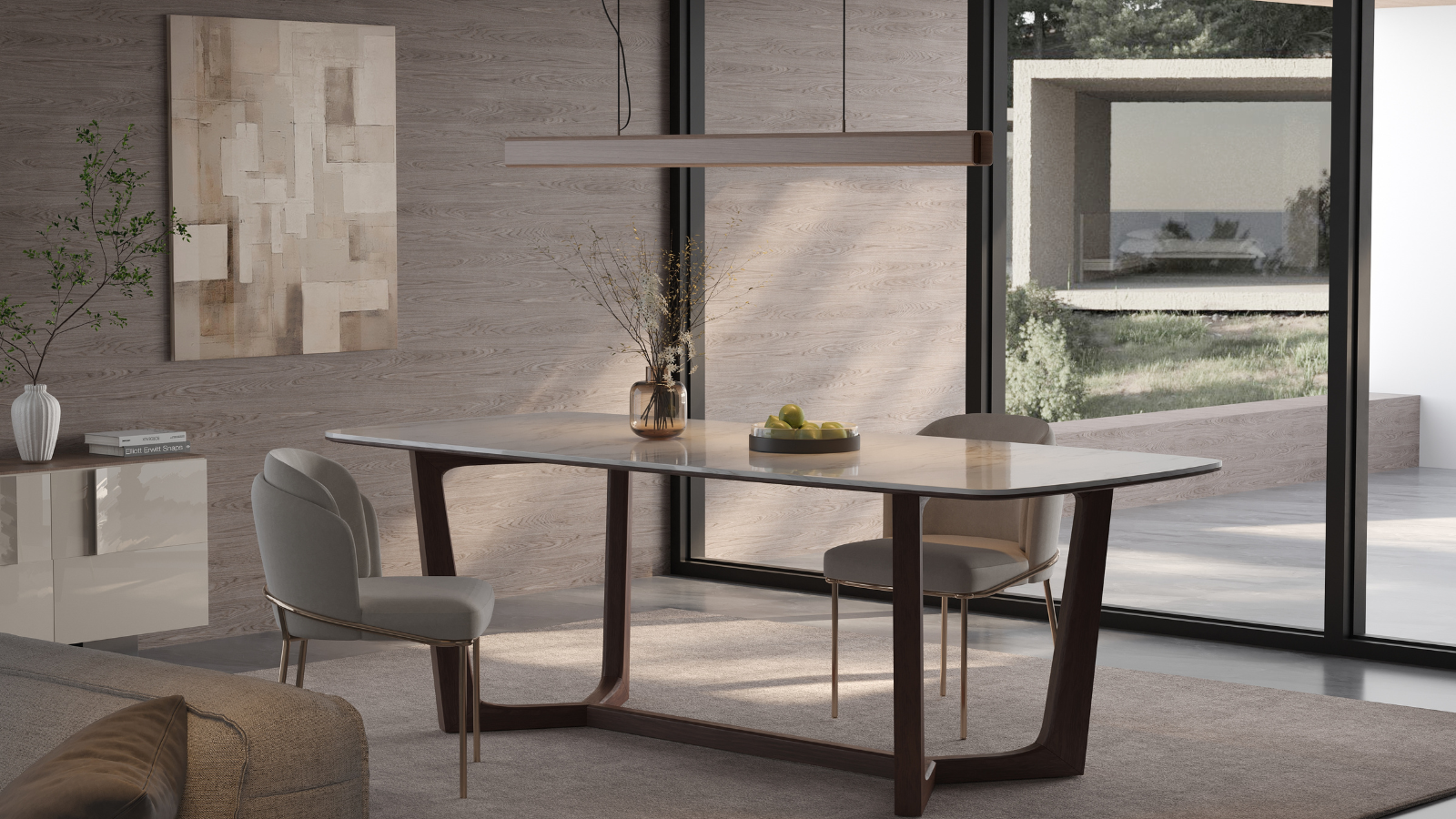
The Clemente Quartz Dining Table brings the Calcutta stone look to a dining setting with the added durability and easier upkeep of engineered quartz.
Maintaining Your Marble Table
Marble rewards a bit of routine care with decades of beauty. A few essentials:
- Seal periodically — marble is porous, so a quality sealant applied every year or so helps protect it from staining.
- Use a pH-neutral cleaner — acidic cleaners (even common household ones) can etch the surface, so stick to products made for natural stone.
- Wipe spills promptly — especially anything acidic like wine, citrus, or coffee, which can leave marks if left to sit.
- Always use coasters and trivets — both for heat protection from hot dishes and to prevent scratching from glassware and cookware.
Maintaining Your Quartz Table
Quartz is the lower-maintenance choice by design. Because it's non-porous, it resists staining without sealing, and a simple wipe-down with a mild soap and water solution is usually all it needs. It's still smart to use trivets for very hot cookware, since sudden temperature changes can affect the resin binder over time, but day-to-day care is refreshingly simple.
Why Stone Furniture Elevates a Room
Beyond the practical comparison of materials, it's worth pausing on why stone furniture has held its place in luxury interiors for so long in the first place. Wood and upholstered pieces bring warmth, but stone brings weight — both literally and visually. A marble or quartz table anchors a room in a way that lighter materials simply can't, giving a space a sense of permanence and quiet confidence.
That's especially true in living and dining rooms, where the table is often the piece people gather around. A stone surface signals intention: this is a room that was designed, not just furnished. It's also a practical choice for households that entertain often, since both marble and quartz stand up well to the wear of everyday hosting — glasses, plates, the occasional spilled drink — far better than most wood finishes.
Beyond the Coffee Table: Stone Across the Home
While coffee tables tend to get the spotlight, luxury stone furniture works just as well in dining settings, entryway consoles, and side tables. A piece like the Clemente brings that same material language to the dining room, where durability matters even more given daily use. Mixing stone pieces across a home — a marble coffee table in the living room, a quartz dining table down the hall — creates a cohesive design thread without forcing every room to look identical.
A Long-Term Investment, Not Just a Trend
Trends in home design come and go, but stone furniture has remained a fixture of well-designed interiors for centuries, and that staying power is exactly the point. Unlike materials chosen for a passing aesthetic moment, marble and quartz age with the room rather than against it. A properly maintained stone table isn't something you'll be replacing in five years — it's a piece that can genuinely be passed down.
That long-term durability is also what makes the higher upfront cost of luxury stone furniture make sense. When you compare the lifespan of a well-cared-for marble or quartz table against lower-cost alternatives that show wear within a few years, the real cost per year of ownership often favors the stone piece by a wide margin.
Frequently Asked Questions
What's the difference between a marble and a quartz table?
Marble is a natural stone prized for its distinctive veining, meaning no two slabs are exactly alike, but it's porous and requires more upkeep. Quartz is an engineered material combining natural quartz with resins to create a non-porous surface that resists staining and scratching far more easily, with a more consistent, uniform look and lower-maintenance ownership.
How do I maintain a marble table?
Seal it periodically since marble is porous, use a pH-neutral cleaner rather than acidic household cleaners that can etch the surface, wipe spills promptly (especially acidic ones like wine, citrus, or coffee), and always use coasters and trivets for heat and scratch protection.
How do I maintain a quartz table?
Quartz is non-porous, so it resists staining without sealing, and a simple wipe-down with mild soap and water is usually all it needs. It's still smart to use trivets for very hot cookware, since sudden temperature changes can affect the resin binder over time.
Where can luxury stone furniture be used beyond the coffee table?
Stone furniture works just as well in dining settings, entryway consoles, and side tables. Mixing stone pieces across a home, such as a marble coffee table in the living room and a quartz dining table down the hall, creates a cohesive design thread without forcing every room to look identical.
Shop This Post
Choosing What's Right for Your Home
If you love the idea of a genuinely one-of-a-kind surface and don't mind a little extra care, a marble piece like the Kaplan or a similar Carrara-inspired design brings unmatched natural beauty to a living room. If you want that same luxury stone look with meaningfully less maintenance — particularly for a high-use surface like a dining table — a quartz option is often the more practical choice.
Either way, a well-made stone table is one of those rare furniture investments that only becomes more of a centerpiece the longer you own it.


