

It's a fair question with no single right answer: how often should you actually replace furniture? The honest response depends heavily on the piece, the materials it's made from, and how it's used day to day. But there are general, realistic ranges worth knowing — not as guarantees, but as a baseline for setting expectations and deciding whether something in your home needs replacing or simply needs a little care.
Realistic Lifespan Ranges, by Category
These are general guidelines, not promises — actual lifespan depends heavily on the quality of construction and how a piece is used and cared for. But they're a useful starting point when you're trying to figure out whether a piece of furniture is nearing the end of its life or has plenty left in it.
Leather Sofas
A well-made leather sofa, built on a solid frame with quality leather and proper cushion support, can often last fifteen to twenty-five years or more with basic care. Leather tends to age better than most upholstery fabrics because it doesn't fray, pill, or wear thin the same way fabric does — it develops a patina instead of visible deterioration, at least for the first decade or two.
Solid Wood Dining Tables
A quality solid wood dining table is one of the few pieces of furniture that can realistically last a lifetime. Solid wood can be sanded and refinished if the surface gets scratched or dulled over the years, which means the table's structural life and its cosmetic life are largely separate problems — a table that looks tired can often be restored rather than replaced.
Upholstered Fabric Pieces
Fabric-upholstered furniture in a high-traffic household — think a family room sofa used daily by kids and pets — often needs reupholstering or replacing sooner than leather or wood pieces, commonly somewhere in the seven-to-fifteen-year range. Fabric quality and how heavily the piece is used both swing this range significantly; a lightly used guest room chair in a durable performance fabric can last well beyond that.
Signs It's Time to Replace vs. Time to Repair
The most useful distinction isn't age, it's what's actually failing. Cosmetic wear — a worn cushion, a faded fabric, a scratched wood surface — is very often fixable. Reupholstering a sofa with good bones, refinishing a wood tabletop, or replacing worn cushion inserts can restore a piece for a fraction of the cost of buying new, and it keeps a piece you already like in the room.
Structural failure is the real signal to replace rather than repair. A frame that's cracked, joints that have loosened beyond a simple tightening, springs that have given out, or a mechanism (in a recliner or sofa bed, for example) that no longer functions reliably — these are the signs that a piece has reached the end of what repair can reasonably fix. If you're ever unsure which category you're in, it's worth asking: is the problem how it looks, or how it functions? Cosmetic problems are usually repairable. Functional and structural problems usually aren't, or aren't worth the cost of trying.

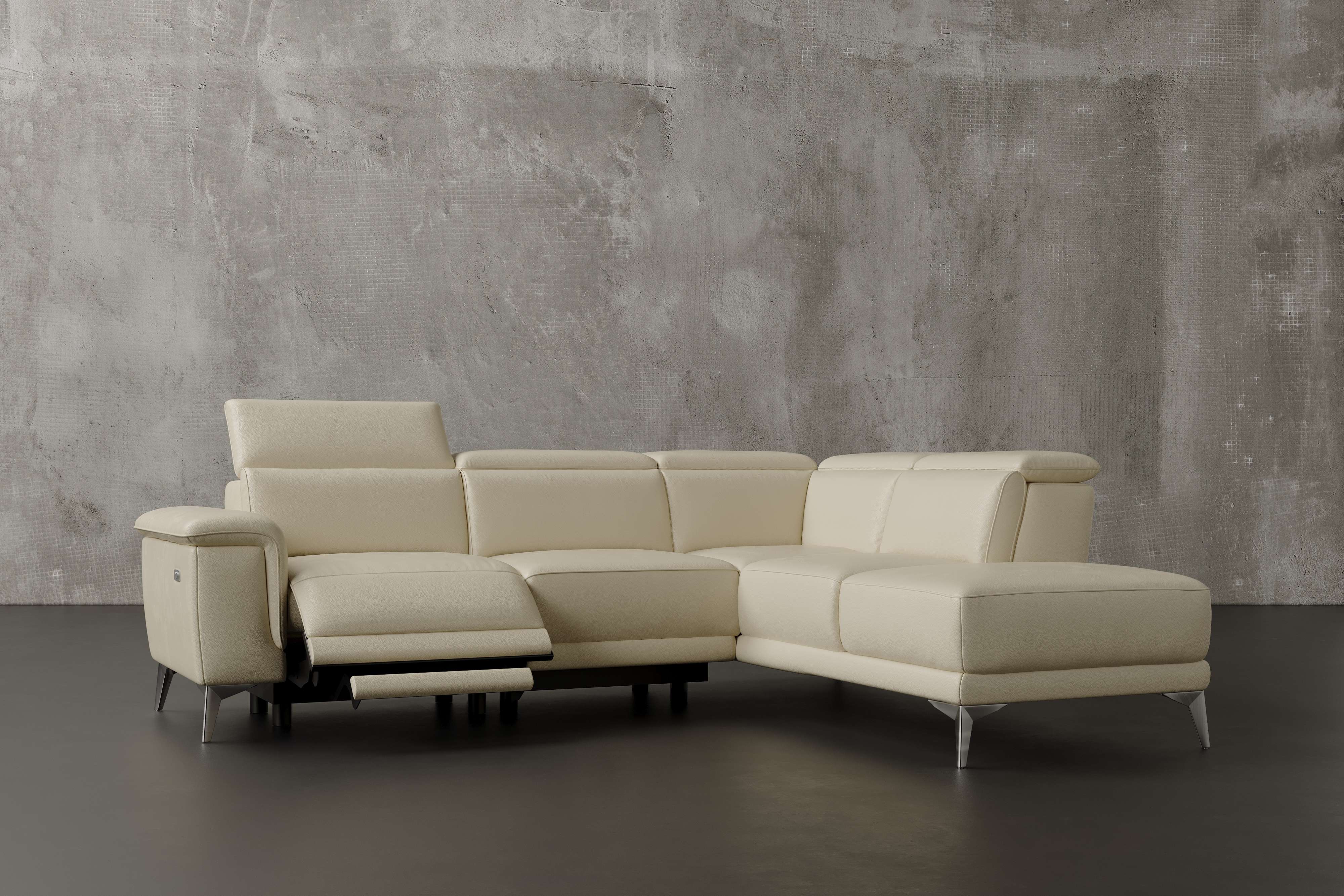
Shown: Millet 112" Leather Reclining Sectional Sofa
The Case for Fewer, Better Pieces
One of the more overlooked ways to reduce how often you're replacing furniture is to buy less of it, but buy it better. A well-constructed piece — solid hardwood frame, full-grain leather, quality joinery — costs more upfront than a mass-produced equivalent, but it also has a genuinely longer usable life, which changes the math over time. Instead of replacing a budget sofa every five to seven years, an investment piece bought once might still be doing its job fifteen or twenty years later. That's really the idea behind Sensible Luxury: not spending more for its own sake, but choosing pieces built to last long enough that you're not back in the market for a replacement every few years.

Shown: Boucher Wood Dining Chair, Set of 2
Maintenance Habits That Extend Furniture Life
A handful of simple habits go a long way toward getting a piece closer to the upper end of its realistic lifespan rather than the lower end:
- Rotate cushions regularly so wear and compression is distributed evenly rather than concentrated in one spot.
- Condition leather periodically to keep it supple and prevent the cracking that comes from letting it dry out over time.
- Keep furniture out of direct, sustained sun exposure, which fades fabric and leather and can dry out and crack leather surfaces faster than normal use would.
- Address spills immediately rather than letting them set, since most stains are far easier to manage in the first few minutes than after they've dried in.
None of these habits are complicated, but done consistently, they're often the real difference between a sofa that's still going strong at fifteen years and one that needed replacing at seven.
When Replacing Is Actually the Sensible Choice
Repair is not always the more sensible option, even when it is technically possible. If a piece has been reupholstered once already and is showing structural fatigue again, or if the cost of a full repair approaches what a quality replacement would cost, it is often more sensible to put that money toward a new piece built to outlast the one it is replacing. The goal is not to repair indefinitely, it is to get a fair, realistic lifespan out of a piece before moving on, and to make the next purchase one that pushes that lifespan further out.
The Bottom Line
There's no universal timeline for replacing furniture, but there is a useful pattern: better-built pieces last longer, cosmetic wear is usually fixable, and structural failure usually isn't. Investing in fewer, well-made pieces up front — and maintaining them along the way — is the most reliable way to stretch the years between replacements.
Frequently Asked Questions
How long does a well-made leather sofa typically last?
A well-made leather sofa built on a solid frame with quality leather and proper cushion support can often last fifteen to twenty-five years or more with basic care, since leather develops a patina rather than fraying or pilling like fabric.
How do I know if furniture needs repair versus replacement?
Cosmetic wear, like a worn cushion, faded fabric, or a scratched wood surface, is usually fixable through reupholstering or refinishing. Structural failure, such as a cracked frame, loosened joints, worn-out springs, or a broken mechanism, is the real signal it's time to replace.
How long do solid wood dining tables last compared to upholstered furniture?
A quality solid wood dining table can realistically last a lifetime, since it can be sanded and refinished when the surface dulls. Upholstered fabric pieces in a high-traffic household typically need reupholstering or replacing sooner, commonly in the seven-to-fifteen-year range.
What habits help furniture last longer?
Rotating cushions regularly, conditioning leather periodically, keeping furniture out of direct sustained sun, and addressing spills immediately all help push a piece toward the upper end of its realistic lifespan.
Shop This Post
If you're ready to invest in a piece built to last, browse the Finn & Form living room collection for sofas, sectionals, and seating designed around long-term durability, not just first impressions.


