

A good recliner earns its place in a room by disappearing into daily life — it's where you land after work, where you read on a Sunday, where a nap happens without anyone planning it. Leather makes that piece last, and it makes it look intentional rather than like a concession to comfort. But "leather recliner" covers a wide range of construction, mechanisms, and price points, and the differences matter more here than on almost any other upholstered piece, because a recliner has moving parts that leather has to survive. This guide walks through what actually separates a recliner worth buying from one you'll regret in three years.
Why Leather Quality Matters More on a Recliner
Every recliner mechanism, whether manual or power, asks the upholstery to flex repeatedly at the same seams — across the back-to-seat junction, around the footrest, and at the arm panels. A sofa cushion gets sat on; a recliner's leather gets folded and unfolded, day after day, for years. That's the single biggest reason leather grade matters more here than on a stationary chair or sofa.
Lower-grade leather, or leather that's been heavily corrected and coated to hide imperfections, tends to crack or peel at exactly those flex points first. Higher-grade leather with more of its natural grain intact keeps its flexibility over time because the fiber structure hasn't been sanded away and buried under a thick pigmented coating. When you're comparing recliners, ask what grade of leather is used and where it's applied — many brands use full leather only on the seating surfaces (seat, back, arms) and a leather-look vinyl or split leather on the back and sides, which is a reasonable cost-saving approach as long as it's disclosed, since those areas don't take the wear or the flexing that the seating surfaces do.
Manual vs. Power Recline
The most basic decision in any recliner purchase is mechanism type, and it affects price, ease of use, and long-term maintenance.
Manual Recline
A manual recliner uses a side handle, lever, or a push-back mechanism you activate with your body weight. There's nothing to plug in, nothing to charge, and nothing electronic to eventually need service. Manual mechanisms are mechanically simple, which generally makes them more affordable and, over a long ownership period, less likely to need a repair. The tradeoff is that reclining takes a bit more physical effort and the recline position is usually less finely adjustable — you get a few fixed positions rather than a continuous range.
Power Recline
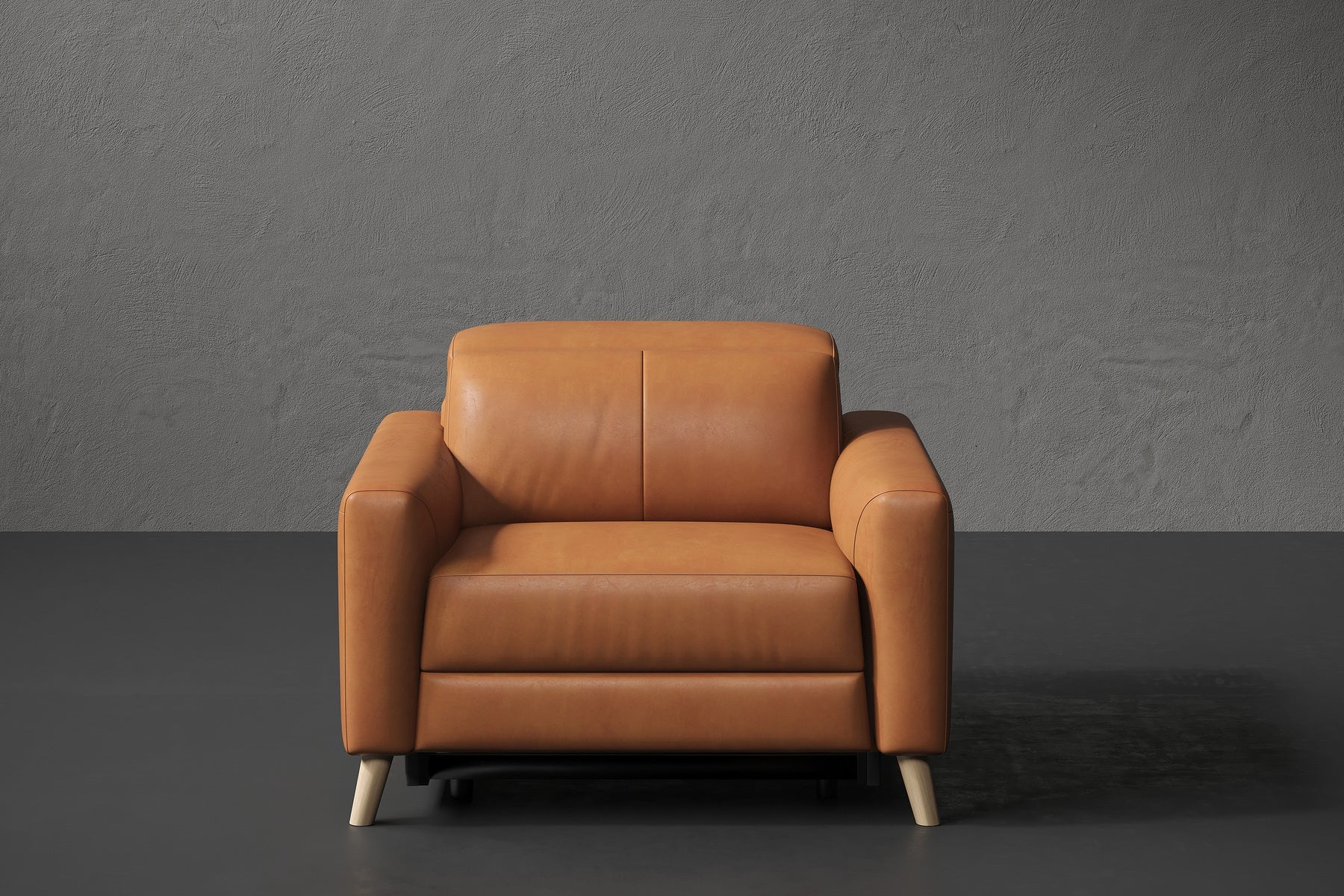
A power recliner uses a motor to move the footrest and backrest, typically controlled with a button or small remote. Power mechanisms let you stop at any position along the recline range, which is a real comfort advantage, and many power recliners also lower the effort needed to get in and out of a fully reclined position, since you're not pushing against the mechanism yourself. The Ozanne Leather Power Recliner Chair is a straightforward example of a single-seat power recliner built for this kind of everyday use.

Shown: Ozanne Leather Power Recliner Chair
Power recliners need to be near an outlet (most use a standard plug, not a hardwired connection), and because they involve a motor and control unit, there's a bit more that could eventually need attention compared with a purely mechanical manual recliner. For most households, that tradeoff is well worth it for the convenience.
Recliner Chair vs. Reclining Sofa or Sectional
The other major decision is scale: do you want a single recliner chair, or a full reclining sofa (or sectional) where multiple seats each recline independently?
A single recliner chair, like the Ozanne, works well as a dedicated spot — a reading chair, a chair paired with a console for gaming or TV, or an accent seat that doesn't need to match the rest of the room's seating exactly. It's also the more flexible purchase if you're not sure how a room's layout will evolve, since a single chair is easy to reposition or move to another room entirely.
A reclining sofa, like the Bain Leather Power Reclining Sofa, extends the same idea across a full seating run, with each section able to recline on its own. That means multiple people can watch a movie, read, or relax at the same time, each in their own recline position, without needing separate chairs scattered around the room. It's the better choice for a primary living room or media room seating arrangement, especially for a household of more than one or two people.

Shown: Bain Leather Power Reclining Sofa
Reclining sectionals take this further, wrapping reclining seats around a corner to fill a larger room while still giving every seat its own recline function. The right choice comes down to room size and how many people regularly use the space at once.
Sizing and Clearance: Wall-Hugger vs. Standard Mechanism
One of the most overlooked parts of buying a recliner is what happens behind it when it opens. This is where the distinction between a "wall-hugger" (or wall-saver) mechanism and a standard mechanism becomes genuinely practical, not just a spec sheet detail.
A standard recliner mechanism reclines by sliding the entire chair back on its base as the footrest extends and the back drops — the chair essentially moves backward into the room as it opens. That means a standard recliner needs several inches to a couple of feet of open space behind it, depending on the design, or it will strike the wall before it can fully recline.
A wall-hugger mechanism is engineered differently: as the footrest extends, the seat itself slides slightly forward on the base rather than the whole chair moving backward, so the back of the chair stays close to the wall throughout the recline motion. This lets a wall-hugger recliner sit just a few inches from a wall and still fully recline, which is a meaningful advantage in smaller rooms, apartments, or any spot where the chair's back is close to a wall.
Before buying any recliner, measure the actual space behind where it will sit, and check whether the mechanism is described as wall-hugger/wall-saver or standard. If you're working with a tight room, a wall-hugger design removes a common source of frustration after delivery.
Swivel and Rocking Recliner Variants
Beyond the basic recline function, many recliners add a secondary motion. A swivel recliner rotates on its base, which is useful in a room where the chair needs to face different directions at different times — toward a TV in the evening, toward a conversation area during the day. A rocking recliner (sometimes called a glider or rocker recliner) adds a gentle back-and-forth rocking motion independent of the recline function, which many people find soothing for everyday relaxing, not just for a nursery. Some recliners combine swivel, rocking, and reclining motion in a single chair. These are worth considering if you want the seat to do more than recline in place, though it's a preference rather than a requirement — plenty of households are perfectly happy with a chair that simply reclines.
Caring for a Leather Recliner
Leather recliner maintenance isn't complicated, but a little consistency goes a long way given how much flexing the material does. Dust and vacuum the seams and crevices around the recline mechanism periodically, since dirt trapped in a fold is what accelerates wear at exactly the point that's already under the most stress. Wipe the leather down with a soft, slightly damp cloth as needed, and use a leather conditioner every few months to keep the material supple — dry leather is what cracks, and conditioning is the simplest way to prevent that, especially near the flex points at the back-to-seat seam. Keep the chair out of direct, prolonged sunlight where possible, since UV exposure dries out and fades leather over time. And avoid placing the chair somewhere its motor cord will be under tension or crimped, since that's an easy way to create an electrical problem that has nothing to do with the leather itself.
Frequently Asked Questions
Is a power recliner worth the extra cost over a manual one?
For most people, yes. A power recliner lets you stop at any point in the recline range rather than a few fixed positions, and it takes less physical effort to operate, which matters over years of daily use. The tradeoff is that a power recliner needs to be near an outlet and has a motor and control unit that a manual mechanism doesn't.
How do I know if I need a wall-hugger recliner?
Measure the space between where the chair's back will sit and the nearest wall. A standard mechanism needs several inches to a couple of feet of clearance to fully recline, because the whole chair slides backward as it opens. If your space is tighter than that, look specifically for a wall-hugger (or wall-saver) mechanism, which slides the seat forward instead of the chair backward, so it can sit close to a wall and still fully recline.
What's the difference between a recliner chair and a reclining sofa?
A recliner chair is a single seat, useful as a dedicated reading or TV chair and easy to reposition in a room. A reclining sofa extends the same recline function across a full seating run, with each section reclining independently, which works better as primary seating for a household of more than one or two people who want to relax at the same time.
How often should I condition leather on a recliner?
Every few months is a reasonable baseline, though it can depend on your home's humidity and how often the chair is used. The goal is to keep the leather supple, particularly around the seams where the mechanism folds the material repeatedly, since dry leather is what eventually cracks at those flex points.
Shop This Post
Whether you're outfitting a single reading corner or a full media room, the right leather recliner comes down to matching the mechanism, size, and leather grade to how you'll actually use it. Browse Finn & Form's full living room collection to see the range in person.


