

A sectional sofa bed asks one piece of furniture to do two very different jobs well: everyday seating for a living room, and a genuinely usable bed when someone needs to stay over. Not every sectional marketed with sleep-related language actually converts into a real bed, and the distinction matters before you buy. This guide covers what actually makes a sectional a "sleeper," who tends to need one, what to think about for mattress comfort, and how to plan around the practical realities of a piece that folds out.
What Makes a Sectional a Genuine "Sleeper"
The key distinction is mechanism, not marketing language. A true sleeper sectional has a dedicated pull-out mattress mechanism: a frame and mattress that store inside or beneath the sectional and pull out, unfold, or fold down into a flat sleeping surface separate from the regular seat cushions. This is a different thing entirely from a sectional that simply reclines flat or has a chaise long enough to lie down on — those pieces can be comfortable for a nap, but they're using the regular seat cushions and frame as the sleeping surface, not a purpose-built mattress mechanism designed for overnight sleep.
In general industry terms, sleeper mechanisms fall into a few common types: a pull-out frame that unfolds from within the sofa's base, hidden under the regular seat cushions; a fold-out mechanism built into a chaise or ottoman section; or a click-clack style back that drops to extend the seating surface into a flat plane. Each accomplishes the same basic goal — converting seating into a flat sleeping area — through different mechanical approaches, and the right one for a given piece depends on its overall design.
When shopping, it's worth confirming directly whether a piece has an actual sleeper mechanism with its own mattress, versus a sectional that's simply described as good for lounging or napping. The two are marketed similarly sometimes, but they solve different problems.
Who Actually Needs a Sleeper Sectional
A sleeper sectional earns its keep in a few specific situations. For a guest room that also needs to function as a den, office, or media room most of the time, a sleeper sectional lets the room do double duty without a dedicated bed taking up permanent floor space. For a studio apartment or any home without a separate guest room, a sleeper sectional is often the only realistic way to offer overnight guests a real bed. And for a multi-use living room — one that hosts movie nights, overnight guests, and everyday lounging in roughly equal measure — a sleeper sectional consolidates what would otherwise be multiple pieces of furniture into one.
If overnight guests are rare, a sectional without a sleeper mechanism, chosen instead for comfort and style, is often the more practical and usually more comfortable everyday choice — sleeper mechanisms add mechanical complexity and, on many designs, a firmer seat feel where the folded mechanism sits under the cushions. The Rodin 94.5" Fabric Sectional Sofa is a useful comparison point here: a non-sleeper sectional built purely for everyday comfort and style, which is the right call for a household that doesn't regularly need to sleep guests overnight.

Shown: Rodin 94.5" Fabric Sectional Sofa
Mattress Comfort Considerations
Sleeper mattresses have historically had a reputation for being thinner and firmer than a standard mattress, largely because they need to fold or roll to fit inside the sofa's frame. That reputation has real roots — a sleeper mattress is inherently more space-constrained than a standalone bed mattress — but mattress quality still varies significantly between pieces, so it's worth asking directly about mattress thickness and fill material rather than assuming. In general, a sleeper intended for occasional guest use (a night or two at a time) has different comfort requirements than one meant to function as someone's regular bed, and it's reasonable to prioritize differently depending on which describes your situation.
Hidden Storage: A Practical Bonus
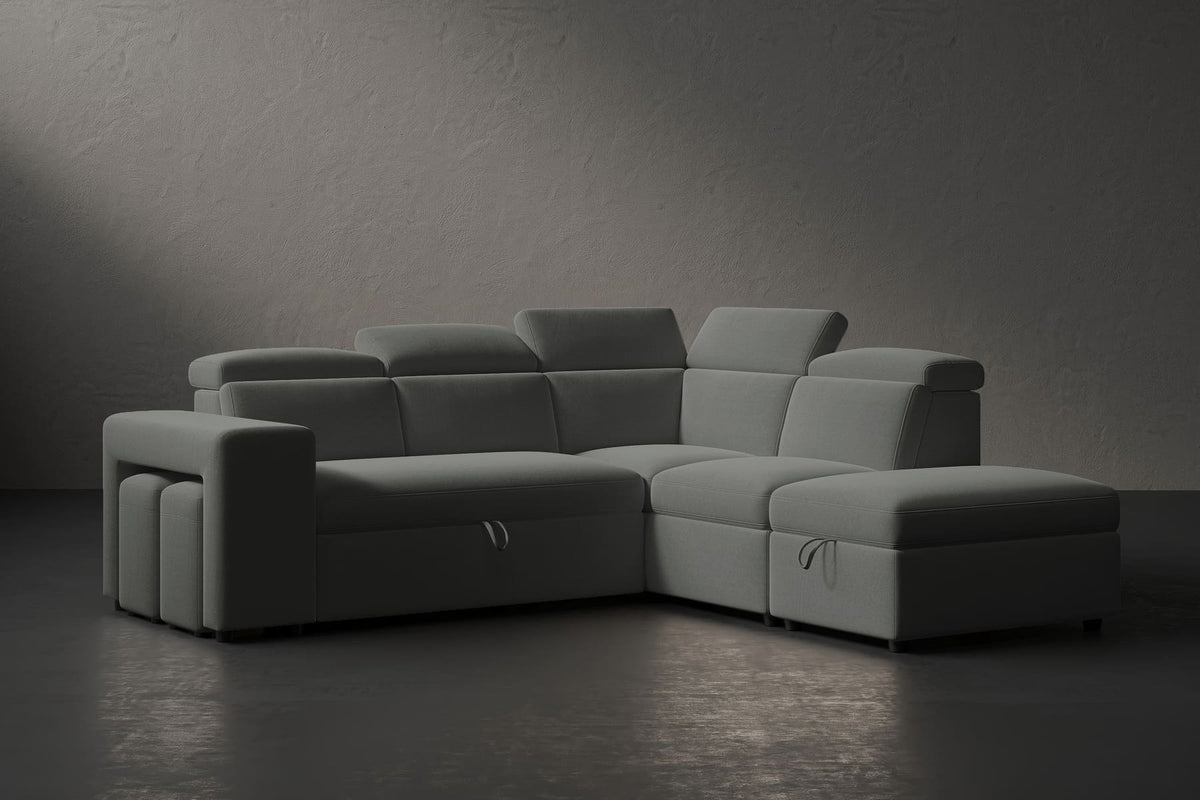
Some sleeper and near-sleeper sectionals also include hidden storage, typically built into an ottoman or chaise section with a lift-up lid. This is a genuinely useful feature independent of the sleeper function — it's a place for spare bedding for the sleeper mechanism itself (a natural pairing), off-season blankets, or general living room overflow that doesn't have another home. The Archambeau Fabric Sectional Sofa Bed with Adjustable Headrests & Hidden Storage combines this kind of storage with adjustable headrests for everyday seating comfort, which is worth noting as a confirmed, real feature of that piece — storage that adds practical value whether or not the sleeper function gets used every week.

Shown: Archambeau Fabric Sectional Sofa Bed with Adjustable Headrests & Hidden Storage
Sizing and Clearance to Fold It Out
This is one of the most commonly overlooked practical details of owning a sleeper sectional: the mechanism needs open floor space to unfold, separate from the space the sectional occupies while closed. Before buying, measure not just where the sectional will sit day-to-day, but the additional floor area in front of the sleeper section that needs to stay clear for the mattress frame to extend into. A sleeper mechanism that's blocked by a coffee table or another piece of furniture simply won't open, which makes this a layout decision to make before delivery, not after.
It's also worth thinking through how often the room will actually need to accommodate the bed in its open position — if the answer is "most nights it stays closed," make sure the room layout works comfortably both ways, since a coffee table or rug placed for the everyday closed configuration may need to shift when the bed is in use.
Frequently Asked Questions
What's the difference between a sleeper sectional and a sectional that just reclines flat?
A true sleeper sectional has a dedicated pull-out mattress mechanism — a separate frame and mattress that unfold from inside or beneath the sofa. A sectional that reclines flat or has a long chaise uses the regular seat cushions as the sleeping surface instead, which can work for a nap but isn't the same as a purpose-built sleeper mechanism designed for overnight sleep.
Who actually needs a sleeper sectional?
Households that regularly host overnight guests without a dedicated guest room benefit most — a den or media room that needs to double as a guest room, a studio apartment without separate sleeping space, or a multi-use living room. If overnight guests are rare, a non-sleeper sectional chosen for comfort and style is often the more practical everyday choice.
Are sleeper sofa mattresses uncomfortable?
Sleeper mattresses are inherently more space-constrained than a standalone bed mattress since they need to fold to fit inside the sofa frame, and they've historically had a reputation for being thinner and firmer as a result. Mattress quality varies between pieces, so it's worth asking directly about thickness and fill material, especially if the sleeper will be used regularly rather than just occasionally.
How much extra floor space does a sleeper sectional need?
Beyond the footprint the sectional occupies while closed, you need additional clear floor area in front of the sleeper section for the mattress frame to extend into when opened. Measure this separately before buying, and make sure nearby furniture like a coffee table can be moved out of the way when the bed is in use.
Shop This Post
A sleeper sectional is a genuinely useful piece when the need is real — the key is matching the mechanism to how often you'll actually use it. Browse Finn & Form's full sectionals collection to compare options.


