

If one style has defined the interiors conversation over the past few years, it's Japandi. Google search interest in "japandi interior design" grew roughly 340% between 2020 and 2025, making it the most-searched AI interior design style heading into 2026 — and unlike a lot of design trends that peak and vanish, Japandi's popularity has kept climbing because it solves a real problem: how to make a minimalist room feel warm instead of empty.
What Japandi Actually Is
Japandi is a deliberate blend of two design traditions that, on paper, shouldn't fit together as neatly as they do: Japanese minimalism, with its emphasis on craft, negative space, and quiet materials, and Scandinavian function, with its focus on comfort, natural light, and everyday usability. The result is a style built on clean lines, honest natural materials, and a neutral palette punctuated with deep, earthy accent tones — think indigo, charcoal, and cedar rather than pastel or jewel tones.
Where a lot of minimalist styles can feel sparse or unfinished, Japandi rooms feel resolved. Every piece is chosen deliberately, materials are left visible rather than covered up, and the overall effect is calm without being cold.
The Core Principles of a Japandi Room
Natural Materials, Left Honest
Solid wood, not wood-look laminate. Woven textures, not printed patterns. Japandi rooms lean hard on materials that show their own grain and texture rather than trying to disguise what they're made of. A wood bed frame or table with visible joinery and natural grain does more for the style than any accessory could.
A Neutral Base With Deep Accent Tones
The palette starts neutral — warm white, oatmeal, soft grey — and then adds depth through a small number of darker, earthier accents: indigo textiles, charcoal ceramics, cedar-toned wood. The goal is contrast without clutter, so a room typically uses no more than two or three tones total.
Function First, Decoration Second
Scandinavian design's core belief — that a beautiful object should also work hard — shows up in Japandi through built-in storage, multi-purpose furniture, and a general resistance to purely decorative clutter. If a piece doesn't serve the room, Japandi doesn't have room for it.
Building a Japandi Bedroom
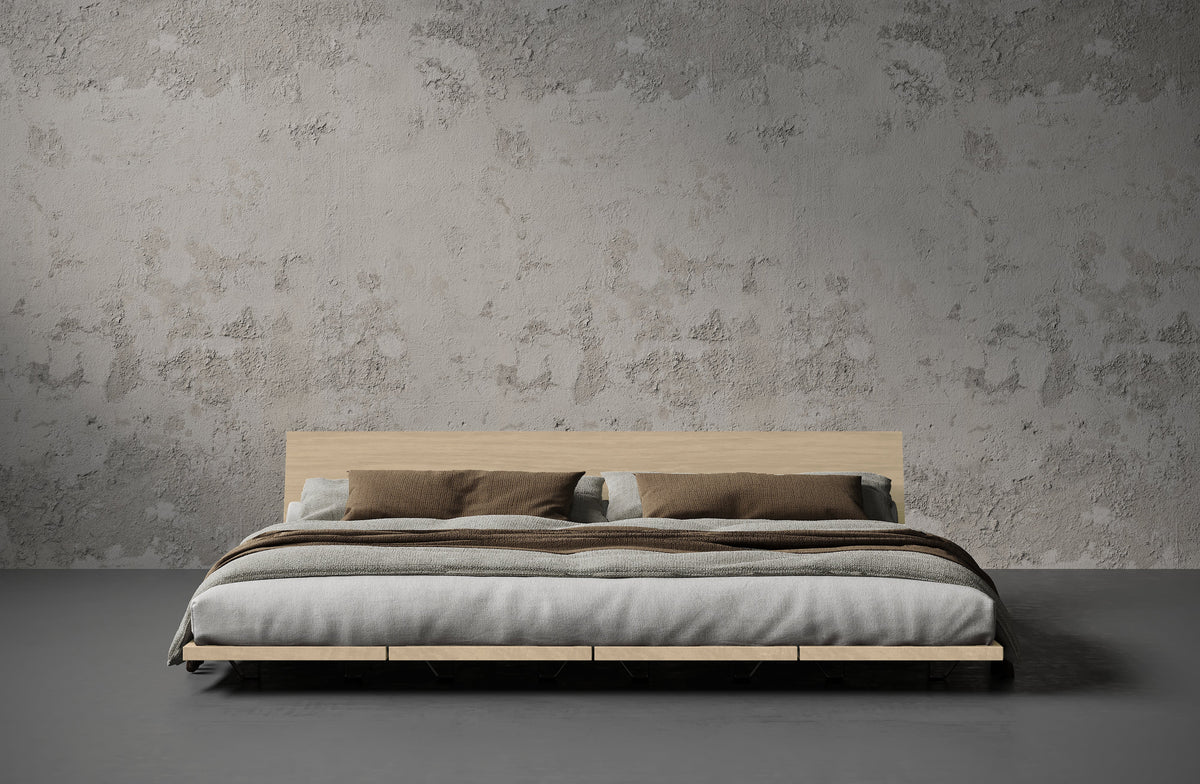
The bedroom is one of the easiest rooms to translate into Japandi, because the style's emphasis on calm and natural materials suits a space built for rest. A solid wood bed frame is the anchor piece — look for visible wood grain, a low profile, and joinery that doesn't hide behind upholstery or paint.

Shown: Leroy Solid Wood Bed Frame
The Leroy's solid wood construction and understated frame in walnut or white oak does exactly what a Japandi bedroom needs — a piece that reads as crafted rather than manufactured, with a low, grounded profile that keeps the room feeling calm rather than imposing.
Bringing Japandi Into the Living Room
The living room asks a bit more of the style, since it has to balance comfort with the same restraint that makes a bedroom feel calm. This is where texture does the heaviest lifting — a bouclé or textured fabric sofa in a neutral tone brings in the tactile warmth Japandi needs without introducing pattern or clutter. We covered this texture-first approach in more depth in our piece on bouclé furniture, and the overlap with Japandi is not a coincidence — both styles use tactile, honest materials to do the work that pattern and color would do in a busier room.

Shown: Rodin 91" Fabric Modern Sofa
A sofa like the Rodin, with its clean lines and quiet warm-white upholstery, works as a Japandi anchor because it doesn't fight for attention — it gives the room's wood tones and accent textiles room to be the story.
Common Japandi Mistakes to Avoid
The most common misstep is treating Japandi as pure Scandinavian minimalism and skipping the Japanese half entirely — that usually means too much stark white and not enough natural material depth. The second most common mistake is over-accessorizing: Japandi's negative space is intentional, and filling every surface with objects undoes the calm the style is built around. Keep accent tones to one or two per room, let wood grain and woven texture carry the visual interest, and resist adding a piece just because a surface looks empty.
Start building your Japandi bedroom or living room from the ground up with the full Wood Beds collection.
Frequently Asked Questions
What's the difference between Japandi and Scandinavian design?
Scandinavian design on its own tends to favor brighter, cooler whites and a lighter overall palette. Japandi pulls in Japanese design's emphasis on natural materials, craft, and deeper earth tones like indigo and cedar, giving the same functional, uncluttered bones a warmer, more grounded feel.
Do I need matching wood tones throughout a Japandi room?
No — exact matching isn't the goal. What matters more is keeping wood tones in the same general family (warm walnut vs. cool white oak, for example) so the room reads as cohesive rather than mismatched, even if individual pieces aren't identical.
Can a small bedroom work in Japandi style?
Japandi tends to suit small rooms particularly well, since the style's emphasis on negative space and a limited piece count naturally keeps a small room from feeling crowded. A low-profile solid wood bed frame and one or two functional pieces are usually enough.
What accent colors work best in a Japandi room?
Deep, earthy tones rather than bright or pastel ones — indigo, charcoal, and cedar are the most commonly used accents. The goal is one or two accent tones layered over a neutral base, not a full spectrum of color.


