

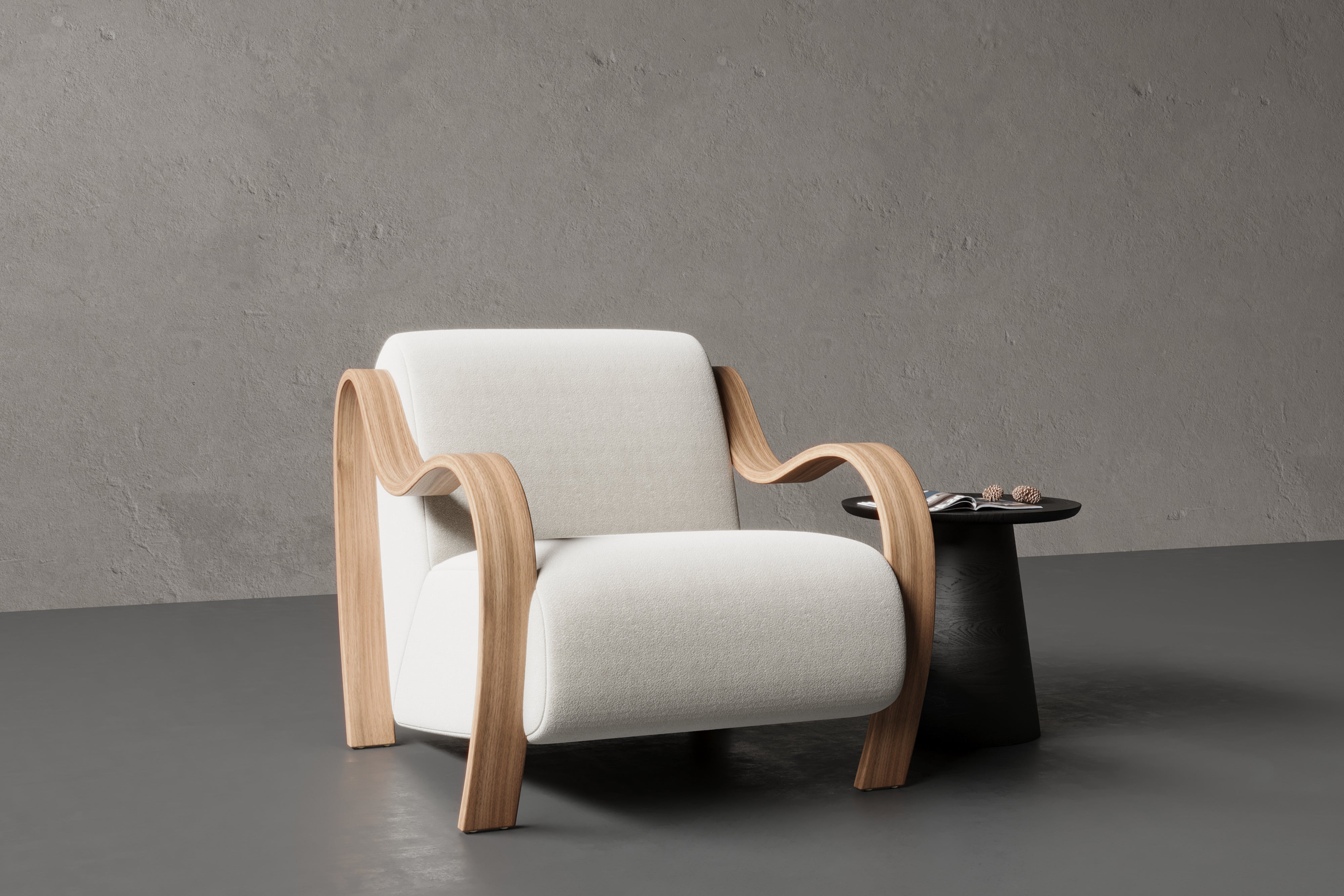
Bouclé has moved well past trend-cycle territory and into something closer to a permanent fixture in furniture design — and unlike a lot of texture trends, it earns that staying power. It's tactile in a way photographs undersell, it reads as refined rather than fussy, and it fits naturally into the quieter, more restrained interiors a lot of people are gravitating toward right now. Here's what bouclé actually is, why it works so well in understated spaces, and where to use it so it looks intentional rather than trend-chasing.
What Bouclé Actually Is
Bouclé — French for "buckled" or "curled" — refers to a looped, nubby weave rather than a specific fiber. The yarn is spun with small loops and curls built into it, which is what gives the finished fabric its distinctive knotted, textured surface instead of a flat, smooth face. It's the same family of texture you'd recognize from a classic tweed knit or a chunky sweater, which is part of why it feels so immediately cozy on furniture — it borrows a texture your hand already associates with comfort.
Why It Looks Different From Standard Upholstery Fabric
Most upholstery fabrics are woven flat and rely on color or pattern to create visual interest. Bouclé does the opposite: the interest comes from the surface itself. Because the loops catch and scatter light differently depending on the angle, a bouclé chair in a single neutral color still has real depth and movement to it, without needing pattern, piping, or contrast stitching to make it feel finished. That's a big part of why it fits so naturally into pared-back, texture-led rooms.
Why Bouclé Fits Quiet Luxury Interiors So Well
The "quiet luxury" aesthetic — understated, tonal, materials-first rather than logo- or pattern-first — depends on texture doing the work that color and pattern usually do. In a room built around soft neutrals, warm woods, and stone, a single loud pattern can throw the whole balance off. Bouclé solves that problem elegantly: it adds visual richness and a sense of quality without introducing a competing pattern or a bold color statement. A room can feel deliberately composed and genuinely inviting at the same time, which is really the whole premise of quiet luxury — restraint that still feels warm, not sterile.
Texture Over Pattern
If you think about what actually signals "considered" in a room versus "decorated in a hurry," it's rarely the boldest piece — it's the layering of textures that read as intentional even in neutral tones. Bouclé, leather, wood, and stone together create that layering without a single loud color choice among them.
Where Bouclé Works Best in a Room
Bouclé earns its keep as an accent, and it's worth being honest about where it performs best — and where it's a riskier long-term choice.
Accent Chairs and Dining Chairs
Because bouclé's charm is largely about touch and texture in a smaller dose, it tends to shine most on pieces you interact with occasionally rather than sit on all day, every day — an accent chair in a reading corner, or dining chairs that see regular but not constant use. On these pieces, the texture reads as a deliberate design choice rather than a maintenance risk, and the lower daily wear means the fabric holds its look for longer.

Shown: Elysian Boucle Accent Chair

Shown: Andre Boucle Dining Chair, Set of 2
A Fair Word on Care and Durability
It's worth being upfront here rather than glossing over it: bouclé's looped texture doesn't wear identically to a tightly woven performance fabric. Because the loops sit slightly proud of the surface, high-friction, high-traffic use — the kind a family's main everyday sofa gets, day in and day out — can flatten or pill the texture faster than it would on a fabric built specifically for heavy daily contact. That's exactly why bouclé tends to make more sense as an accent piece than as the fabric for your primary, most-used seating. Routine care is straightforward — regular vacuuming with a soft brush attachment and prompt attention to spills — but it's a fabric chosen for its look and feel first, not for maximum wear resistance, and it's worth choosing it with that trade-off in mind.
Styling Bouclé So It Feels Intentional
Bouclé looks its best in contrast, not in isolation. Because the texture itself is the star, pair it with materials that either warm it up or sharpen it, rather than other soft, textural fabrics that compete for the same visual space.
Pair With Warm Wood
A bouclé chair next to a warm walnut or oak side table grounds the softness of the fabric with something structural and grain-driven. The contrast between the loop texture and a smooth, warm wood surface is one of the most reliable pairings in a neutral room.
Pair With Leather and Stone
Leather brings a smooth, cool-to-warm contrast that plays well against bouclé's nubby surface — a bouclé accent chair across from a leather sofa creates exactly the kind of textural layering that makes a room feel curated rather than matched. Stone, whether in a coffee table top or a mantel, adds a third, harder texture that keeps the room from tipping too far into "all soft surfaces."
Frequently Asked Questions
What is bouclé fabric, exactly?
Bouclé — French for "buckled" or "curled" — refers to a looped, nubby weave rather than a specific fiber. The yarn is spun with small loops and curls built into it, which gives the finished fabric its distinctive knotted, textured surface instead of a flat, smooth face.
Is bouclé a good choice for a family's everyday sofa?
Not usually as the primary, most-used seating. Because the loops sit slightly proud of the surface, high-friction, high-traffic daily use can flatten or pill the texture faster than a fabric built specifically for heavy daily contact. It tends to make more sense as an accent piece, like a chair or dining chairs, than as the fabric for a main everyday sofa.
How do you care for bouclé furniture?
Routine care is straightforward: regular vacuuming with a soft brush attachment and prompt attention to spills. It's a fabric chosen for its look and feel first rather than maximum wear resistance, so it's worth caring for it consistently.
What materials pair well with bouclé?
Warm wood, leather, and stone. A warm walnut or oak side table grounds bouclé's softness with something structural, leather brings a smooth contrast against its nubby surface, and stone adds a third, harder texture that keeps a room from tipping too far into all-soft surfaces.
Bringing Bouclé Into Your Own Space
Bouclé isn't a fad that requires timing your purchase to a moment — it's a genuinely useful texture tool for building depth into a quiet, neutral-toned room without resorting to pattern or bold color. Used thoughtfully, on the right pieces, it adds warmth and tactility that a room with only smooth fabrics and hard surfaces can be missing.
Shop This Post
If you're ready to bring that texture into your own space, browse our bouclé collection for accent chairs, dining chairs, and more built with this fabric in mind.


