

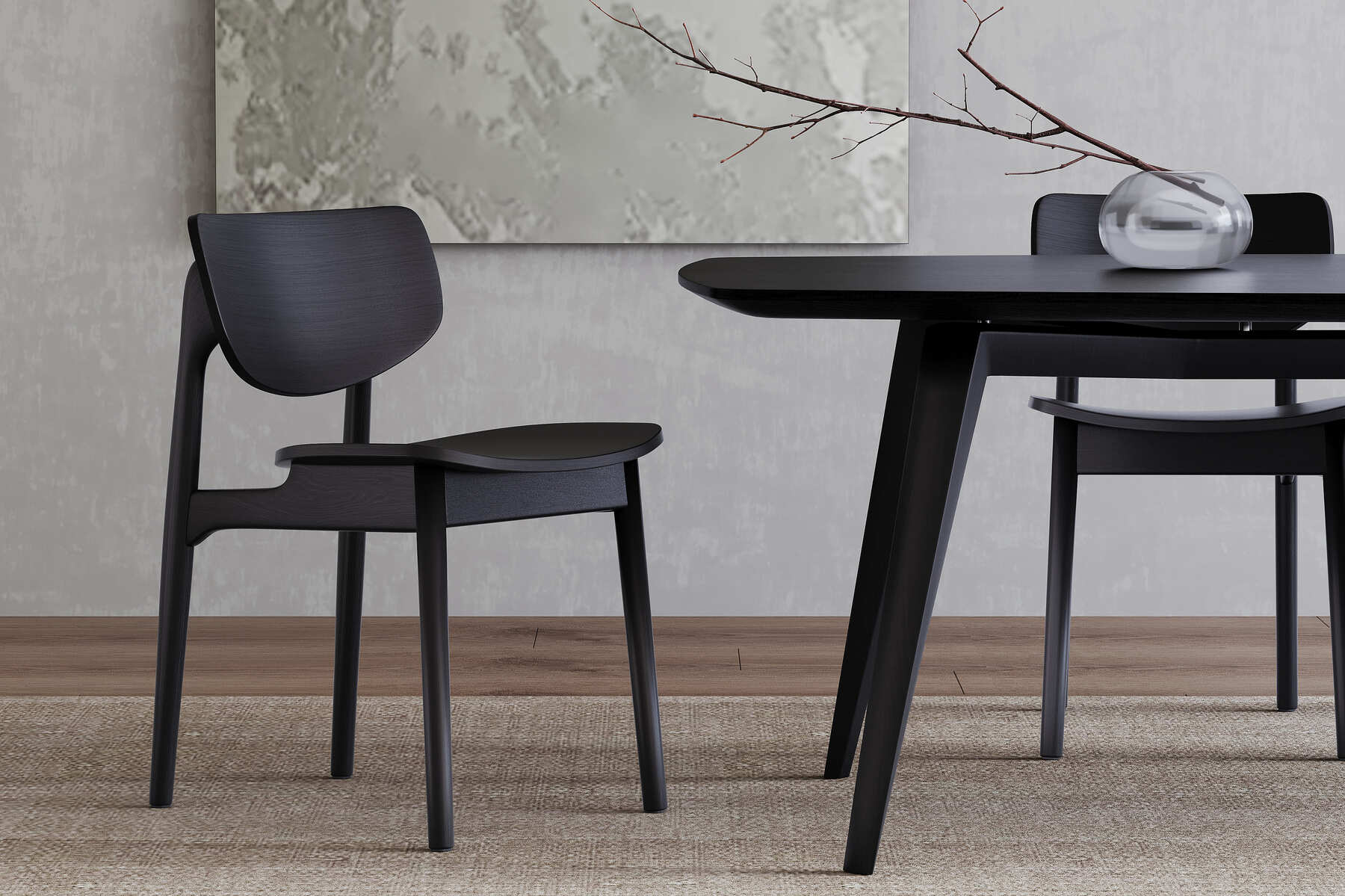
It's easy to choose dining chairs based on how they look in a photo — and then discover, three months later, that half of them sit unused because they're uncomfortable, too low for the table, or simply not sturdy enough for how your household actually uses the dining room. Dining chairs get more daily wear than almost any other seating in the house, and getting the practical details right matters just as much as getting the style right. Here's how to choose dining chairs that actually get used, meal after meal.
Match Chair Height to Table Height
The single most important — and most overlooked — measurement in dining chair shopping is the relationship between seat height and tabletop height. Standard dining tables run about 28 to 30 inches tall, and the general rule of thumb is to leave roughly 10 to 12 inches of clearance between the top of the chair seat and the underside of the tabletop. That clearance gives your knees and thighs room to sit comfortably without banging into the table's apron (the structural frame beneath the tabletop) every time someone shifts in their seat.
If you're buying chairs separately from your table — which is common when mixing styles or replacing a worn-out set — always check both measurements before ordering. A chair that looks proportionate in a product photo can turn out to be several inches too tall or short once it's next to your actual table, and that's a frustrating (and returnable) mistake to make after the fact.
Seat Depth and Back Support for Long Meals
A chair can look elegant and still fail at its actual job if the seat is too shallow or the back offers no real support. This matters more for dining chairs than people often expect, since a dining chair that feels fine for a quick weeknight meal can become genuinely uncomfortable during a longer dinner, a holiday gathering, or a few hours of conversation after the plates are cleared. A chair with a too-shallow seat forces you to perch on the edge, while a back with no lumbar support at all will have guests shifting and standing up early — which, over time, means that chair quietly becomes the one nobody wants to sit in.
When you're evaluating a chair (in person, if at all possible), sit in it for longer than a few seconds. Check whether the seat depth supports your thighs without digging into the back of your knees, and whether the backrest offers some actual support rather than just a decorative silhouette.
Choosing the Right Material
Dining chair material is as much a practical decision as an aesthetic one:
- Upholstered seats add real comfort for long meals and tend to feel warmer and more inviting, which makes them a strong choice for a primary dining set that sees regular, extended use.
- Wood chairs offer durability and easy cleaning — spills wipe off rather than soaking in — which makes them a practical choice for households with young kids or anyone who wants low-maintenance daily upkeep.
- A mix of both at one table can add visual interest and is a genuinely popular approach: it lets you balance comfort where it matters most with durability where spills and scuffs are most likely.

Shown: Boucher Wood Dining Chair, Set of 2
A wood chair like the Boucher above illustrates the durability side of that equation well — a solid, easy-to-clean option for a dining room that sees daily use, or as the simpler side chairs in a mixed-material table setup.
Mixing Chair Styles at One Table
You don't need every chair at your table to match. A popular and genuinely practical approach is to place upholstered captain's chairs — often slightly larger, sometimes with arms — at each end of the table, with simpler wood chairs running along the sides. This gives the head-of-table seats a bit more presence and comfort (useful for whoever tends to sit there longest during a meal) while keeping the side chairs lighter, easier to move, and easier to tuck in when they're not needed.

Shown: Dupont Linen-like Fabric Dining Chair, Set of 2
An upholstered option like the Dupont above works well in exactly that kind of pairing — its linen-like fabric seat adds comfort and softness at the ends of the table, or throughout the whole set if you prefer a fully upholstered look, while still fitting comfortably alongside simpler wood chairs elsewhere.
Spacing: How Many Chairs Actually Fit
Beyond the chairs themselves, spacing around the table determines whether the seating actually feels comfortable in practice. A general guideline is to allow about 24 inches of width per chair around the table, so that elbows don't collide and people can pull their chairs in and out without bumping into their neighbors. When you're planning how many chairs to buy, measure your table's perimeter and divide by 24 inches per seat as a starting point, then adjust based on whether you tend to want more breathing room or are comfortable seating people a bit closer together.
Durability for Kids and Frequent Entertaining
If your household includes young kids, hosts often, or simply puts its dining chairs through heavy daily use, durability deserves real weight in your decision. A few practical considerations:
- Wood chairs or chairs with performance-fabric upholstery tend to handle spills and scuffs more gracefully than delicate natural-fiber fabrics.
- Sturdy joinery and a solid frame matter more than they might seem to at first glance — dining chairs get pulled out, pushed in, and sat on daily, and a well-built frame will hold up to that far longer than a lightweight or poorly joined one.
- Removable or cleanable seat cushions can extend the life of an upholstered chair considerably, since the fabric itself takes the brunt of daily wear.
A Few Questions Before You Buy
Should dining chairs have arms?
Armchairs at the head of the table add comfort and a bit of visual hierarchy, but arms along the sides can make it harder to tuck chairs fully under the table and can interfere with pulling up close during a meal. Armless side chairs paired with armed captain's chairs at the ends is a practical, widely used solution.
How do I know if a chair will actually be comfortable?
Beyond the height and depth measurements above, look for a backrest with at least some contour or support rather than a perfectly flat panel, and check that the seat material — whether upholstered or wood with a shaped seat — doesn't feel hard or edged after a few minutes of sitting.
Do all dining chairs at one table need to match?
No. As covered above, mixing upholstered chairs at the ends with simpler wood chairs along the sides is a common and practical approach that adds visual interest without sacrificing comfort or durability where it matters most.
Shop This Post
Choosing Chairs That Actually Get Used
The best dining chairs are the ones that disappear into daily life — comfortable enough that no one thinks twice about sitting down for a while, sturdy enough to handle years of meals, and sized correctly so no one is stuck folding their knees under a too-low table. Explore Finn & Form's dining chairs collection to find pieces that check all three boxes, whether you're outfitting a full new set or mixing in a few new chairs alongside an existing table.


