

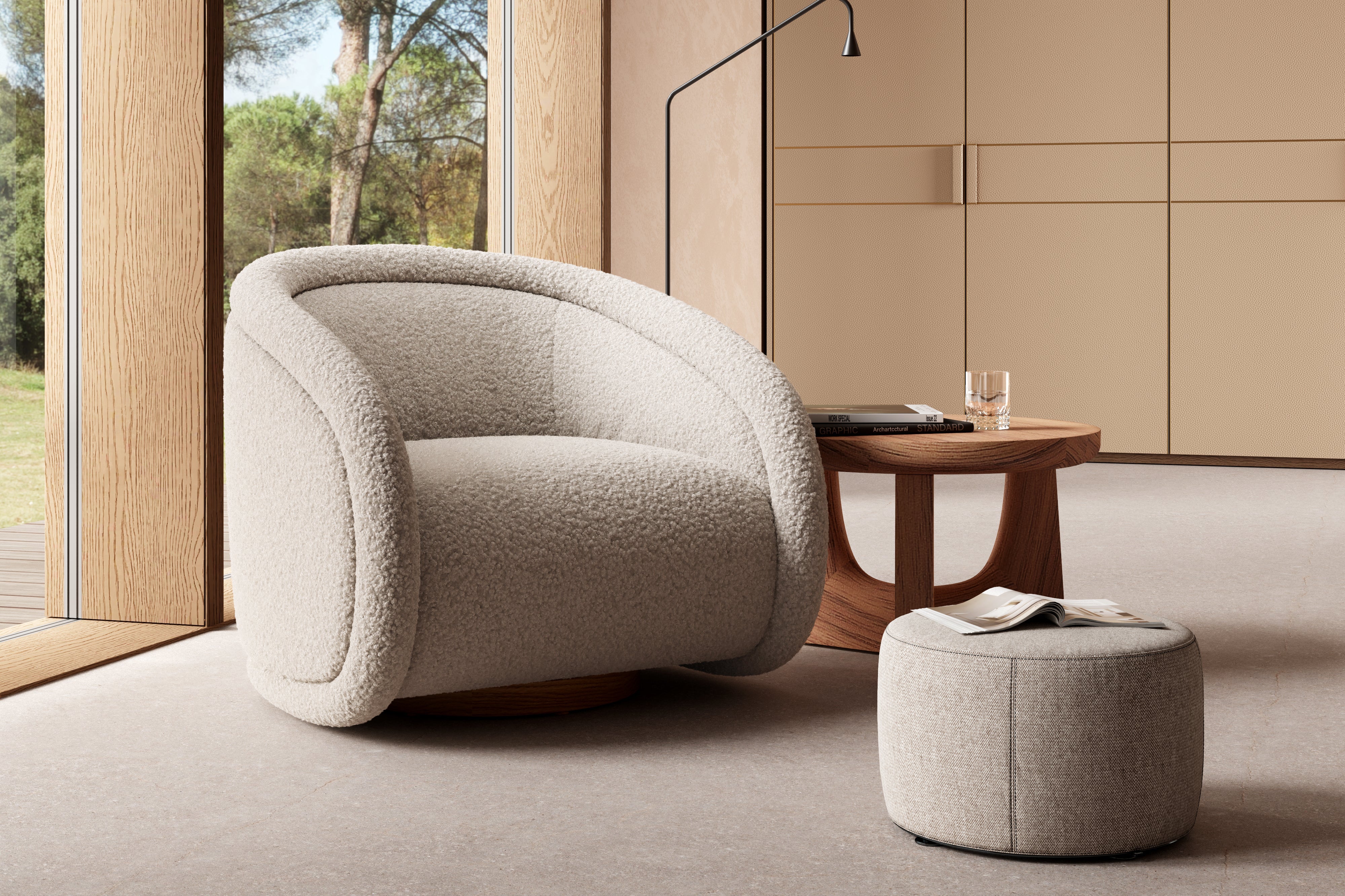
Furnishing a home around pets doesn't mean settling for furniture that just survives the damage — it means choosing pieces that were designed with real households in mind from the start. Claws, shedding, muddy paws, and the occasional accident are simply part of life with a dog or cat, and the right materials make all the difference between furniture that looks worn out in a year and furniture that still looks good five years in. Here's what actually matters when you're shopping for pet-friendly furniture.
Why Fabric Choice Matters More Than Anything Else
The single biggest factor in how well furniture holds up with pets in the home is the upholstery itself. Loosely woven or delicate fabrics — linen blends, some boucles, thin cotton weaves — are the most likely to snag on claws, pill quickly, and show wear within months. Performance fabrics, by contrast, are engineered specifically for durability and easy cleaning: tightly woven, often treated to resist stains and moisture, and built to withstand the kind of daily wear that pets (and kids, for that matter) put on a sofa. If you have pets, this is the category worth prioritizing over anything else on your shopping list.

Shown: Auclair Bouclé Fabric 360° Swivel Chair
Leather: An Underrated Pet-Friendly Option
Leather is often overlooked by pet owners who assume it will scratch easily, but a quality leather sofa is actually one of the more practical choices for a household with animals. Unlike fabric, leather doesn't trap pet hair and dander in its weave — a quick wipe with a damp cloth removes most surface debris, whereas fabric requires vacuuming and lint rollers to get the same result. Leather also doesn't absorb odors the way fabric does, which matters more than people expect in a home with pets. Light scuffing from claws is a real consideration with any upholstery, but a well-finished leather can handle everyday pet activity better than most people assume, and minor marks are typically far easier to buff out or condition away than a snag in woven fabric.
Color and Pattern as a Practical Tool
It sounds like a small thing, but choosing the right color can save a surprising amount of upkeep. A solid, light-colored sofa will show every strand of pet hair and every muddy paw print, while a medium-to-dark tone, a subtle pattern, or a textured weave does a much better job of camouflaging daily wear between cleanings. This isn't about hiding a mess permanently — it's about not needing to clean visible pet hair off the sofa every single day just to keep it looking presentable.
What to Avoid
A few upholstery types are worth steering away from if pets are a regular presence in your living room:
- Loose, open weaves that catch claws easily and unravel with repeated snagging.
- Delicate silks or thin linens that show stains and wear far faster than performance-grade textiles.
- Very light, uniform solids that make every bit of fur or dirt immediately visible.
- Low, exposed padding at the base that pets can easily reach and dig at, rather than a fully upholstered or raised frame.
Frame and Construction Considerations
Beyond the upholstery itself, the underlying construction matters if you have a pet that jumps on and off furniture regularly. A sturdy hardwood frame with reinforced joinery will hold up to repeated impact far better than a lightweight frame, and tightly attached cushions (rather than loose, easily displaced ones) tend to stay in place better through daily jumping, circling, and settling in. If your pet has a favorite spot, look for furniture with tight-back or attached-cushion construction in that section, since it will keep its shape longer under concentrated, repeated pressure.

Shown: Savoy Fabric 3-Piece Sectional Sofa
Reading Fabric Labels and Product Descriptions
When you're comparing options online, product descriptions and fabric names can tell you a lot before you ever touch the material in person. Terms like "performance weave," "stain-resistant," or "easy-clean" generally indicate the fabric was engineered with exactly this kind of household use in mind, while purely decorative fabric names without any durability language are worth double-checking before you commit, especially for a piece that will see daily pet traffic. It's a small habit, but it saves the disappointment of discovering a beautiful sofa simply wasn't built for the way you actually live.
Placement Tips for Pet-Friendly Living Rooms
Where you place furniture matters almost as much as what you buy. Keep favorite sofas and chairs a short distance from muddy entry points like a back door or dog run, so pets have a chance to settle before flopping onto upholstery. A washable throw or slipcover over a favorite pet perch adds an easy layer of protection you can remove and clean without disturbing the furniture underneath. And if a particular chair or sofa spot becomes an obvious favorite, consider a durable, easy-clean piece specifically for that role, saving more delicate items for lower-traffic areas of the room.
Caring for Performance Fabric and Leather Long-Term
Regular, light maintenance keeps pet-friendly furniture looking good far longer than an occasional deep clean. A quick vacuum with an upholstery attachment a few times a week keeps performance fabric from accumulating embedded hair, and a damp microfiber cloth handles most everyday leather cleanup. Conditioning leather every few months keeps it supple and less prone to cracking, which also makes it more resistant to scuffing over time. None of this takes much effort, but consistency is what keeps furniture looking new well past the point most cheaper pieces would have already worn out.
Choosing Pieces for Multi-Pet or Multi-Pet-and-Kid Households
If your home includes more than one pet, or pets alongside young children, the durability math changes further — furniture gets more concentrated daily use, and the margin for delicate materials shrinks accordingly. In these households, it's worth prioritizing performance fabric or leather across the majority of your main seating rather than mixing in more delicate pieces "for looks." A cohesive, durable material palette across the room also tends to look more intentional than a mix of hardy and fragile pieces side by side, and it means you're not constantly worried about which cushion or chair is off-limits.
Frequently Asked Questions
Is leather or fabric better for a home with pets?
Both can work well, but leather is often underrated. Unlike fabric, leather doesn't trap pet hair and dander in its weave — a quick wipe with a damp cloth removes most surface debris, and it doesn't absorb odors the way fabric does. Performance fabrics are the better fabric option, since they're engineered specifically for durability and easy cleaning.
What upholstery should I avoid if I have pets?
Steer away from loose, open weaves that catch claws and unravel; delicate silks or thin linens that show stains and wear quickly; very light, uniform solids that make fur and dirt immediately visible; and low, exposed padding at the base that pets can easily reach and dig at.
Does furniture color actually matter for pet owners?
Yes. A solid, light-colored sofa shows every strand of pet hair and every muddy paw print, while a medium-to-dark tone, a subtle pattern, or a textured weave does a much better job of camouflaging daily wear between cleanings.
How often should I clean pet-friendly furniture?
A quick vacuum with an upholstery attachment a few times a week keeps performance fabric from accumulating embedded hair, and a damp microfiber cloth handles most everyday leather cleanup. Conditioning leather every few months keeps it supple and more resistant to scuffing over time.
Shop This Post
Shop With Pets in Mind
The right furniture doesn't require compromising on style to accommodate a pet-friendly home — it just requires prioritizing materials and construction built for real daily use. Performance fabrics and quality leather both hold up well to shedding, scratching, and general pet activity when chosen thoughtfully, and small choices in color and placement go a long way toward keeping a living room looking its best. Explore Finn & Form's Performance Fabric collection for pieces built specifically to handle the demands of a home shared with pets.


