

Teak has been the go-to wood for outdoor furniture for generations, and once you understand why, it becomes a lot easier to know how — or whether — to care for it. The truth is that teak requires very little maintenance to last for decades outdoors, but there are a few things worth knowing about how it weathers, what to do (or not do) to it, and how to make the choice between letting it age naturally or maintaining its original color.
Why Teak Is Prized for Outdoor Furniture
Teak's reputation as the premier outdoor wood comes down to its naturally high oil content. That oil is distributed throughout the wood's grain and makes it naturally resistant to water, rot, and insect damage without needing heavy chemical treatments or sealants to protect it. This is well-established, general knowledge about teak as a material — it's part of why teak has been used in outdoor and marine applications for so long, from ship decking to garden furniture, well before modern wood treatments and sealants existed as an alternative.
Practically speaking, this means teak furniture can be left outdoors year-round in most climates without rotting, warping, or attracting pests the way many other woods would. It's also dense and durable enough to hold up to regular use — dining chairs being pulled in and out, tables bearing weight — without the wear you'd see in a softer or less naturally protected wood.

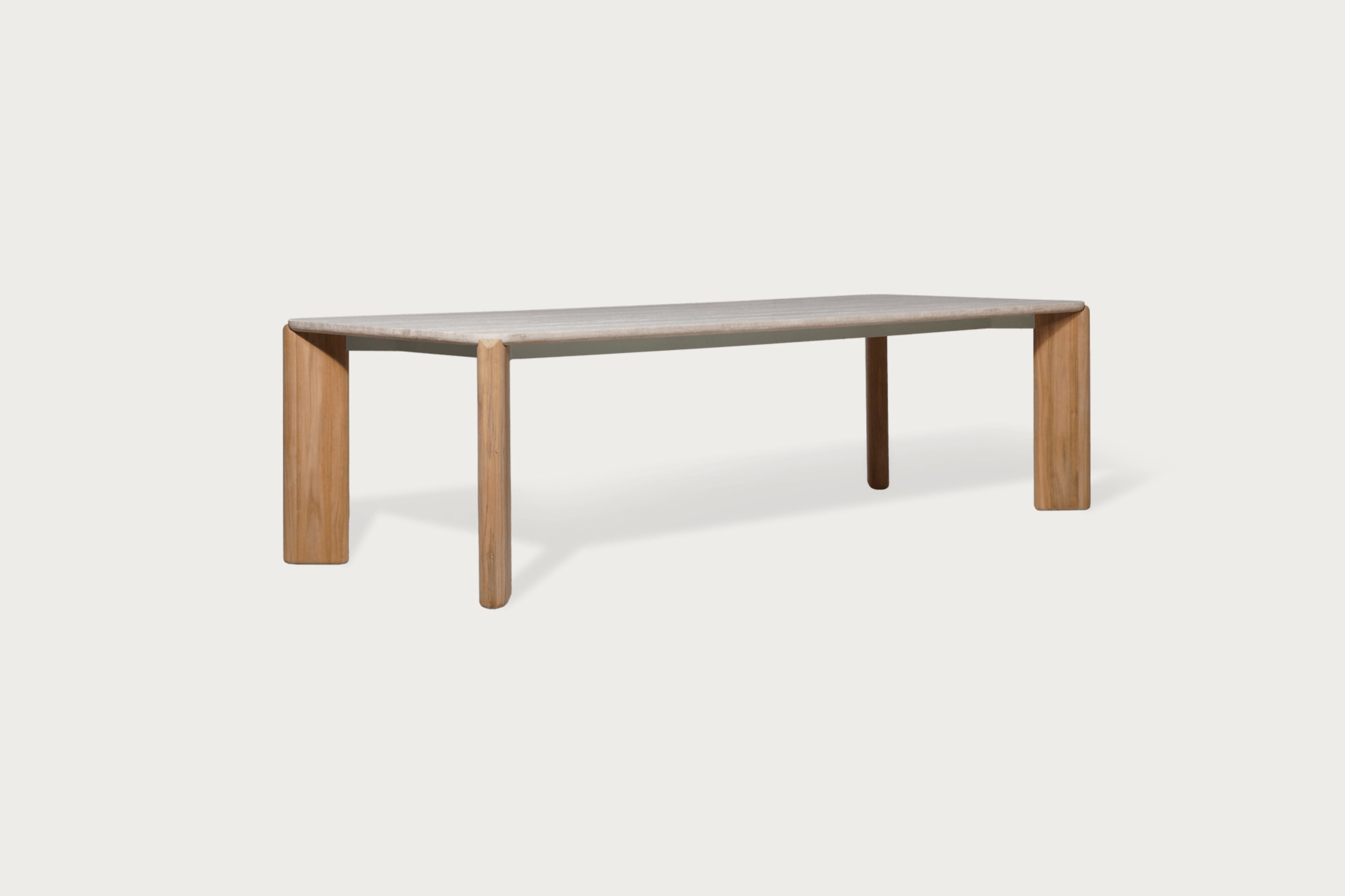
Shown: Freya Outdoor Teak Dining Table
The Natural Weathering Process
If left untreated and exposed to the sun and elements, teak will gradually shift from its original golden-brown color to a soft, silvery-grey patina over time. This is a completely normal part of how the wood ages outdoors — it doesn't indicate any damage or deterioration to the wood's structural integrity, and the high oil content that protects teak from rot and insects continues to do its job throughout this color change.
In fact, plenty of teak furniture owners actively prefer the weathered grey look and simply let it happen naturally, without any intervention. It's a legitimate aesthetic choice, not a compromise — the silvery patina has its own appeal, particularly in coastal or minimalist outdoor settings, and it requires zero ongoing maintenance to achieve or preserve.
How to Maintain the Original Golden Color, If You Prefer It
If you'd rather keep your teak furniture looking closer to its original golden-brown tone, that's also entirely achievable, though it does require some periodic upkeep:
- Clean periodically with a soft brush and mild soap and water to remove surface dirt, pollen, and grime before it has a chance to dull the wood's color.
- Apply teak oil or a teak sealant occasionally if you want to actively preserve or restore the golden tone — this is worth thinking of as an optional cosmetic step rather than a structural necessity, since the wood's natural oils are already doing the protective work on their own.
It's worth emphasizing that this is a preference-based choice, not a requirement. Raw, unsealed teak left to weather naturally is just as legitimate — and considerably lower-maintenance — an option as maintained teak. Neither approach affects the furniture's underlying durability or lifespan.

Shown: Sjöberg Teak Outdoor Swivel Lounge Chair
Seasonal Care Considerations
In most climates, teak furniture can stay outside year-round without any special seasonal intervention, thanks to its natural weather resistance. That said, a few simple habits can help keep it looking its best over the long term:
- Clean before storing for winter in colder climates if you do choose to bring pieces indoors or into a garage for the season — starting the off-season clean means less buildup to deal with when you bring furniture back out in spring.
- Cover pieces during long stretches of non-use, such as an extended winter or an off-season closure of an outdoor space, simply to reduce the accumulation of dirt, pollen, and debris — not because the wood itself needs protection from the elements.
- Check hardware periodically on pieces with moving parts, like a swivel base, to make sure fittings remain snug after seasonal temperature changes.
What to Avoid
A few common mistakes can actually do more harm to teak furniture than the elements themselves:
- Pressure washing — the high-pressure spray can damage and roughen the wood's natural grain, stripping away more of the surface than intended and leaving the wood looking uneven rather than clean.
- Harsh chemical cleaners — strong detergents or bleach-based cleaners can strip teak's natural oils and alter its color unevenly. A mild soap and water solution, applied with a soft brush, is sufficient for regular cleaning.
- Scrubbing too aggressively — a gentle touch with a soft-bristle brush is all that's needed; aggressive scrubbing can scratch or roughen the surface unnecessarily.
Frequently Asked Questions
Is grey, weathered teak still good quality?
Yes. The grey patina is purely cosmetic and doesn't reflect any loss of strength or durability — teak's natural oils continue protecting the wood from rot and insects regardless of its surface color.
How often does teak actually need oiling?
If you want to maintain the golden color, an application once or twice a year (more in harsher sun exposure, less in shaded or milder climates) is typically enough. If you're fine with the natural grey patina, no oiling is required at all.
Can teak furniture stay outside all winter?
In most climates, yes — teak's natural weather resistance means it doesn't need to be brought indoors. A cover and a pre-winter clean are reasonable precautions in colder regions, but they're about tidiness and covering the surface from debris, not protecting the wood from damage.
The Bottom Line on Teak Care
Teak's appeal for outdoor furniture has always been its low-maintenance durability — it doesn't demand constant upkeep to remain functional and structurally sound for decades. Whether you let it weather naturally to a silvery grey or keep up with periodic oiling to preserve the golden tone, the choice comes down to the look you prefer, not a maintenance requirement your furniture can't survive without.
Shop This Post
Explore Finn & Form's teak outdoor pieces, including the Freya dining table and the Sjöberg lounge chair, to bring naturally durable, low-maintenance seating and dining to your outdoor space.


