

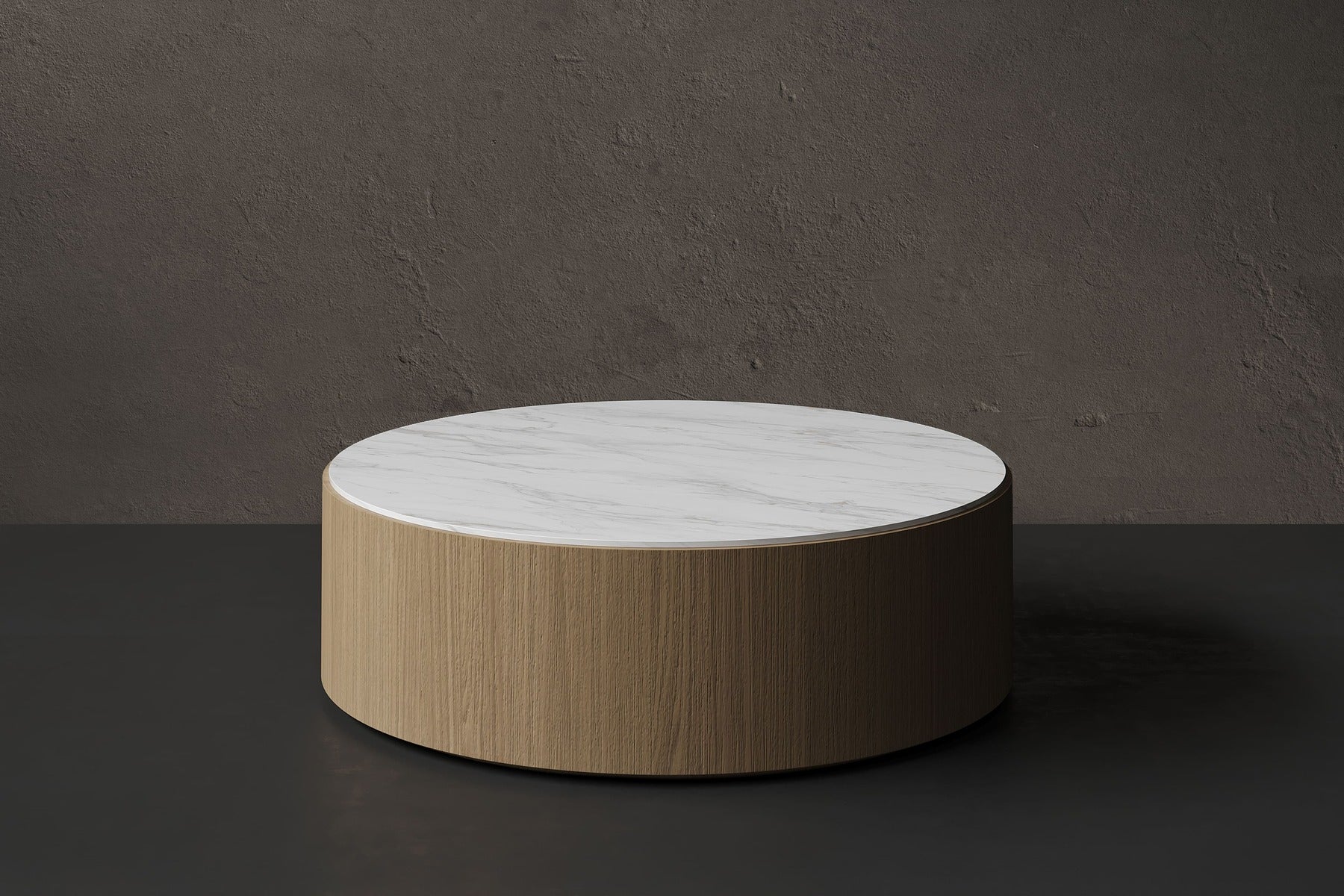
A coffee table is the most-touched surface in the living room, which is exactly why it's so easy to get wrong. Style it like a showroom display and it stops being useful. Pile it with everyday clutter and it stops looking intentional. The best coffee table styling finds the middle ground: a table that looks considered at a glance but still welcomes a coffee mug, a stack of remotes, or someone's feet after a long day. Below are the principles that actually hold up in a lived-in home, not just in a photo.
Start With the Rule of Odd Numbers
Interior stylists lean on odd-numbered groupings because they read as more natural and less rigid than pairs. Two objects side by side can look like a matched set waiting to be used as bookends; three objects create a visual triangle your eye naturally travels around. A simple formula to borrow: one stack of books, one object with height or shape (a small sculptural bowl, a candle, a vase), and one living element, like a small plant in a low pot. That's it — three items, three different heights, one surface.
Why This Works Better Than "More"
The instinct when a table looks bare is to add more. Resist it. A coffee table with six or seven small objects starts to look like a collection you forgot to put away, and it also eats up the space you actually need for daily use. Three well-chosen pieces, spaced with a little breathing room between them, will always look more finished than a crowded arrangement — and it leaves the rest of the surface open for the tray, the drink, the laptop.
Leave Room for the Table to Actually Be a Table
This is the part that gets left out of most styling guides: a coffee table's first job is to hold things people use — drinks, snacks, a book mid-read, feet at the end of the day. If your styled objects take up the entire surface, you'll end up shoving them aside every time someone sits down, and within a week the "styled" look disappears entirely. A good rule of thumb is to keep your decorative grouping to roughly a third or less of the total surface area, positioned toward one end or corner rather than dead center. That leaves the rest of the table open and ready, which means the styling actually survives contact with real life instead of getting swept onto a side table the first time you have guests over.
Use a Tray to Corral the Small Stuff
A low tray is one of the simplest tools for keeping a coffee table looking pulled-together, especially in households with remotes, coasters, phone chargers, or kids' odds and ends drifting across the surface. A tray does two things at once: it groups small items into one visual "zone" so they read as intentional rather than scattered, and it makes daily cleanup faster because everything has one home to return to. Choose a tray material that contrasts gently with your table top — a woven or matte-finish tray on a polished stone table, for instance, adds warmth without fighting the table's own texture.
Choosing a Table Material That Anchors the Room
Coffee table styling only goes so far if the table itself doesn't suit the room. Material is doing more visual work than most people give it credit for, since a coffee table typically sits at the literal center of a living room's sightlines.
Marble and Quartz for a Polished Anchor
A marble or quartz top brings a cool, reflective surface that reads as elevated without requiring anything else in the room to change. Because natural stone has its own built-in movement and veining, it can act as the room's visual centerpiece — which means you can actually style it more simply, since the material itself is already doing some of the work. This pairs particularly well with warmer textures elsewhere in the room, like a bouclé or leather sofa, wood flooring, or woven textiles, giving the space contrast between cool stone and warm fabric rather than everything competing for the same tone.

Shown: Laconi Carrara Marble Coffee Table
A lighter stone like Carrara marble, with its soft grey veining on a white base, keeps a room feeling open and bright — a good choice if your seating is already darker or more saturated in color, since it prevents the whole room from feeling heavy. A deeper stone, like black marquina marble, does the opposite: it grounds a lighter room and gives it a more dramatic, tailored edge.

Shown: Greco Nero Marquina Marble Coffee Table
When you're comparing coffee table styling ideas across a room, it helps to think of the table's material as the fixed point everything else responds to — pick the stone or finish first, then choose your styled objects and tray in tones that either match or intentionally contrast with it.
Refresh the Look Seasonally Without Buying New Furniture
One advantage of good coffee table styling is that it's inexpensive to change. You don't need a new table to make a room feel refreshed for a new season — you need new textures and colors on the same surface.
Simple Swaps by Season
In cooler months, swap in a textured ceramic vase, a chunkier knit or wool throw draped nearby, and deeper, warmer tones — rust, forest green, walnut brown — in your small objects. In warmer months, lighten the palette: a glass or lighter ceramic vase, a single stem or small potted plant, and cooler tones like sage, cream, or pale blue. Because you're only changing three or four small items and maybe the tray, a full seasonal refresh can cost very little and take under an hour, while still making the room feel intentionally updated rather than static year-round.
Rotate, Don't Accumulate
The easiest way to keep this sustainable is to rotate a small existing collection of objects in and out of storage by season, rather than continually buying new pieces. Two or three books, one seasonal object, and one plant is enough for any table — the goal is a considered edit, not an accumulation.
Frequently Asked Questions
How many objects should I put on a coffee table?
Three works best, following the rule of odd numbers: one stack of books, one object with height or shape like a small sculptural bowl or vase, and one living element like a small plant in a low pot. Three items at three different heights read as more natural and finished than a crowded arrangement.
How much of the coffee table surface should styling take up?
Roughly a third or less of the total surface area, positioned toward one end or corner rather than dead center. That leaves the rest of the table open and ready for actual use — drinks, a book, or feet at the end of the day.
What's an easy way to keep a coffee table looking pulled-together?
Use a low tray to corral small items like remotes, coasters, or phone chargers. It groups everything into one visual zone so it reads as intentional rather than scattered, and it makes daily cleanup faster since everything has one home to return to.
How often should I refresh coffee table styling for the season?
Refresh it once per season by swapping three or four small items and maybe the tray — warmer, deeper tones and textured pieces in cooler months, lighter and cooler tones in warmer months. A full refresh can take under an hour and cost very little since you're rotating existing objects rather than buying new ones.
Bringing It Together
Good coffee table styling isn't about following a rigid formula — it's about balancing visual interest with actual usability, choosing a table material that sets the tone for the room, and refreshing small details rather than overhauling the whole setup every few months. Start with the table itself, since that's the piece doing the most structural work in the room, and let the smaller styling choices follow from there.
Shop This Post
If you're shopping for a table that can act as that anchor point — in marble, wood, or a mix of materials — browse our full range of coffee tables to find one that fits both your room's proportions and the way you actually use the space.


