

"Leather" isn't a single material — it's a category that spans an enormous range of quality, durability, and price, and the grade of leather used in a piece of furniture is one of the most important (and most often glossed-over) factors in how it looks, feels, and holds up over time. Understanding the difference between full-grain, top-grain, and bonded leather — along with terms like aniline and semi-aniline, which describe how leather is dyed rather than its grade — will make you a much more confident shopper, whether you're furnishing a living room in person or comparing options online. Here's what each term actually means and how to evaluate leather quality for yourself.
Full-Grain Leather
Full-grain leather is the outermost layer of the hide, used in its natural state without sanding or buffing away the surface imperfections. Because the tightly-woven natural grain of the hide is left intact, full-grain leather is generally the most durable leather grade available, and it develops a deeper, richer patina over years of use as the surface responds to oils, light, and everyday contact. This is the leather that ages in the way people often associate with a well-loved leather sofa — softening and gaining character rather than simply wearing out.
The tradeoff is that full-grain leather shows the hide's natural markings, so no two pieces (or even two cushions on the same sofa) will look perfectly identical. For most buyers, that natural variation is part of the appeal rather than a downside, since it signals genuine, minimally processed leather.
Top-Grain Leather
Top-grain leather is also taken from the upper layer of the hide, but it's been lightly sanded and refinished to create a more uniform, consistent surface. This process removes some of the hide's natural markings in exchange for a smoother, more even look across the entire piece of furniture — and because the surface has a light protective finish, top-grain leather also tends to be somewhat more stain- and scratch-resistant day to day than full-grain.
Top-grain is still considered a high-quality leather grade, and it's a common choice for furniture that needs to look consistent and clean-lined, since the refinishing process evens out the surface. It's often slightly more affordable than full-grain as well, making it a practical middle-ground choice for buyers who want genuine leather without full-grain's natural, more rustic variation.

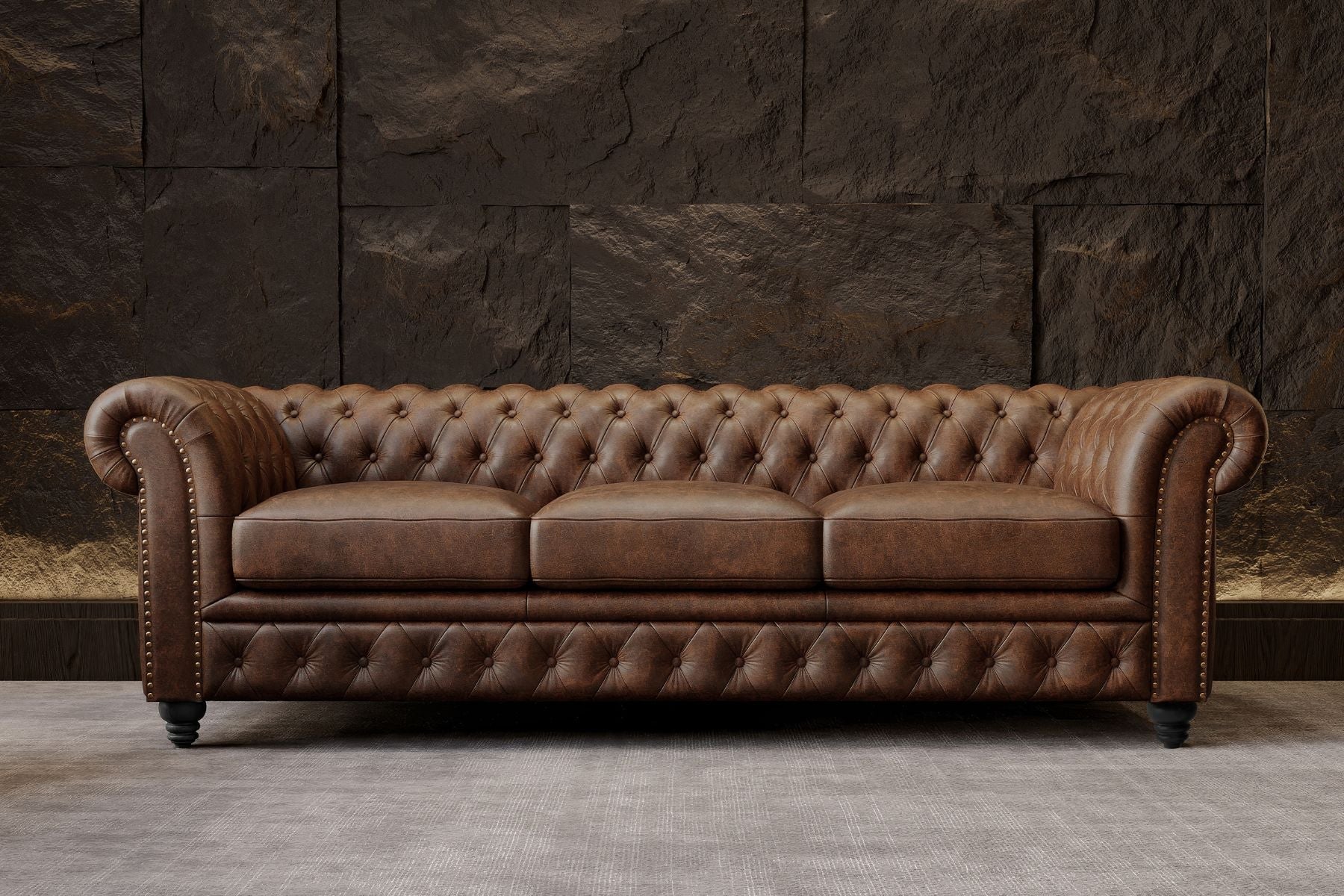
Shown: Figaro Chesterfield Roll Arm Leather Sofa
Bonded Leather
Bonded leather is made from leftover leather scraps and fibers, shredded and bonded together with a backing material, then finished with a surface coating designed to look like leather. It's the least durable of the leather grades and the most affordable, but it's worth knowing how to spot it: bonded leather tends to peel, crack, or flake over time in a way that genuine full-grain or top-grain leather does not, since the surface is essentially a coating rather than the natural hide itself. If a leather product's price seems unusually low relative to comparable pieces, bonded leather (or a heavy blend of it) is worth ruling out before you buy.
Aniline and Semi-Aniline Leather: A Dyeing Method, Not a Grade
It's easy to see "aniline leather" listed alongside full-grain and top-grain and assume it's another grade — but aniline actually describes how the leather is dyed, not the quality tier of the hide itself. Aniline leather is dyed using soluble dyes that penetrate the hide without covering up its natural surface, which produces a soft, natural-looking result that shows the hide's texture clearly. It's prized for its authentic look and feel, but because there's no protective topcoat, it's also more susceptible to staining and fading than leather with additional finishing.
Semi-aniline leather takes the same dyeing approach but adds a very light protective topcoat, which gives it a bit more everyday durability and stain resistance while still preserving much of aniline leather's natural look and soft hand-feel. Semi-aniline is often considered a practical middle ground for furniture that needs to look and feel like natural leather but also stand up to daily household use.
How to Evaluate Leather Quality When You're Shopping
Whether you're in a showroom or shopping online, a few practical checks will tell you a lot about the leather grade you're looking at:
Ask about the grade directly
A reputable retailer should be able to tell you specifically whether a piece is full-grain, top-grain, or a blend, and how it's finished. Vague language like just "genuine leather" without a specified grade is worth following up on, since "genuine leather" is a broad legal term that doesn't guarantee a specific quality tier.
Check whether a warranty or care guide is provided
Higher-quality leather furniture is typically backed by clearer care instructions and often a longer warranty, since the manufacturer has more confidence in how the material will hold up. A lack of any care guidance can be a signal to ask more questions.
Look at surface consistency versus natural variation
A very uniform, almost printed-looking surface with no natural texture at all can indicate a heavily processed or bonded material, while natural variation in grain and slight differences in tone across a piece are hallmarks of genuine full-grain or top-grain leather. Neither is inherently "better" — a very consistent surface can simply reflect a well-finished top-grain leather — but understanding which look you're seeing helps you know what to expect from the material over time.

Shown: Aria Leather Lounge Chair & Ottoman
A Quick Reference for Comparing Leather Grades
When you're weighing options side by side, it can help to think of leather grade and dyeing method as two separate questions rather than one. Grade — full-grain, top-grain, or bonded — tells you how much of the natural hide is present and how it's been processed. Dyeing method — aniline or semi-aniline — tells you how the color was applied and how much protective finish sits on top. A piece can be, for example, a top-grain leather finished with a semi-aniline dye, combining a durable hide with a soft, natural-looking surface and a bit of added stain resistance. Understanding both axes independently makes it much easier to compare two products that might otherwise use similar-sounding marketing language.
Why This Matters for Everyday Furniture Shopping
Leather grade isn't just a technical detail for collectors or industry insiders — it directly affects how a sofa or chair will look and perform in your home over the years you'll actually own it. A piece made with a quality leather grade and finished thoughtfully will typically soften and develop character with use, resist everyday spills and wear better, and hold its value and appearance far longer than a lower-grade or bonded alternative. Taking a few minutes to understand what you're buying — full-grain versus top-grain, aniline versus semi-aniline — is one of the most useful things you can do before investing in a leather piece.
Finn & Form's leather seating collections, including pieces finished in the brand's Italian Nappa leather, are designed around this same principle: leather chosen and finished to look and perform well not just on day one, but for years of regular use.
Frequently Asked Questions
What's the difference between full-grain and top-grain leather?
Full-grain leather uses the hide's outer layer without sanding away its natural markings, making it the most durable grade and one that develops a deeper patina over time. Top-grain is lightly sanded and refinished for a more uniform, consistent surface with slightly better stain and scratch resistance.
What is bonded leather?
Bonded leather is made from leftover leather scraps and fibers, shredded and bonded together with a backing material and a surface coating designed to look like leather. It's the least durable and most affordable grade, and tends to peel, crack, or flake over time.
Are aniline and semi-aniline grades of leather?
No. Aniline and semi-aniline describe the dyeing method, not the quality grade. Aniline leather is dyed with soluble dyes that penetrate the hide without a protective topcoat, giving a natural look but less stain resistance; semi-aniline adds a light protective topcoat for more everyday durability while keeping much of that natural feel.
What should I ask about before buying leather furniture?
Ask directly whether the piece is full-grain, top-grain, or a blend and how it's finished, check whether a warranty or care guide is provided, and look at whether the surface shows natural variation (a sign of full-grain or top-grain leather) versus an overly uniform, printed-looking surface.
Shop This Post
Ready to Shop with Confidence
Now that you know what to look for, browse Finn & Form's leather sofa collection or the full leather collection to see the difference quality leather makes for yourself — and don't hesitate to ask about the specific grade and finish on any piece you're considering.


