

For most of the last decade, minimalism meant restraint bordering on austerity: white walls, glass and chrome, rooms so pared-back they photographed beautifully and felt cold to actually live in. That era is fading. The design conversation heading into 2026 has shifted decisively toward what stylists and design publications are now calling warm minimalism — the same disciplined, uncluttered bones as classic minimalism, but rebuilt in a palette and material language that feels inhabited rather than staged.
What Is Warm Minimalism?
Warm minimalism keeps minimalism's core discipline — few pieces, clean lines, no visual noise — but swaps out the cold foundation. Instead of stark white walls and glossy black-and-chrome furniture, the palette moves toward warm white, cream, sand, oatmeal, and taupe as a base, layered with richer accent tones like camel, terracotta, olive green, soft clay, and warm blush. The silhouettes stay simple. The materials and colors do the emotional work that ornament used to do.
It shares a lot of DNA with Japandi, the Japanese-Scandinavian hybrid style that has become the most-searched interior style of the past few years — both reject clutter and maximalist decoration in favor of function and craft. But where Japandi leans toward a cooler, more austere natural palette, warm minimalism is explicitly about softness: rounded edges, tactile fabrics, and colors pulled from clay, sand, and wood rather than stone and steel.
Why Stark Minimalism Is Losing Its Grip
The broader shift happening across interiors right now is a move away from cold, showroom-perfect spaces toward rooms that feel warm, intentional, and personal. Stark minimalism photographed well for a decade of design blogs, but it never quite worked as a place to actually live — hard surfaces, sparse seating, and a palette with no warmth in it. Homeowners furnishing rooms today are asking a different question than they did five years ago: not "how little can this room contain," but "how does this room feel to sit in at the end of a long day." Warm minimalism is the answer design has landed on. It keeps the editing discipline of minimalism — no clutter, no excess pieces — while making sure every piece that stays earns its place through comfort and material warmth, not just visual restraint.
The Warm Minimalist Palette, Piece by Piece
Building a warm minimalist room starts with a neutral foundation — walls, rugs, and large upholstery in warm white, cream, or sand — and then layering in one or two deeper accent tones through smaller pieces, cushions, and wood finishes. The goal is depth without visual clutter: a room with three or four tonal notes reads as calm and considered, where a room with one flat neutral reads as unfinished.
Anchor the Room in a Quiet, Warm-Toned Sofa
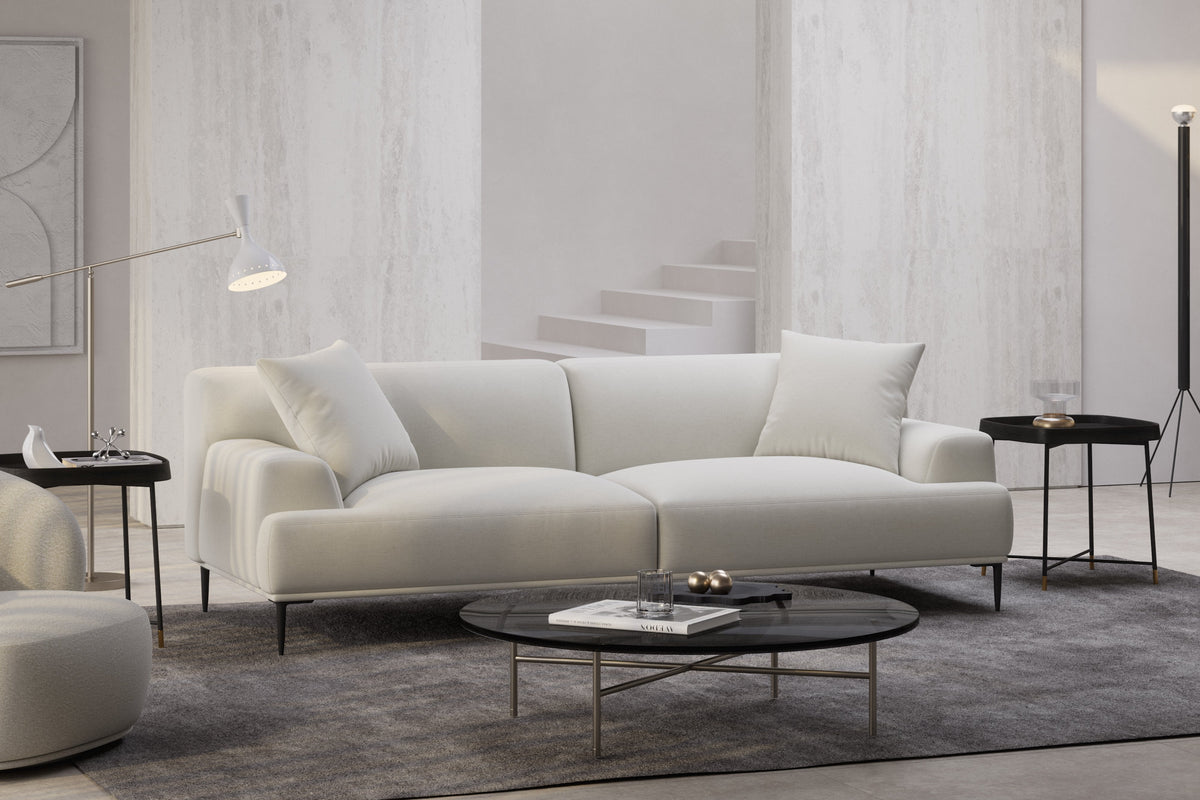
A sofa is the single largest surface in most living rooms, which makes it the piece that sets the tone for everything else. In a warm minimalist room, that means choosing an upholstery color from the cream-to-sand family rather than cool white or grey, and a silhouette that's clean without being severe — no ornate skirting, no busy tufting, just honest proportions and a soft hand-feel fabric.

Shown: Rodin 91" Fabric Modern Sofa
The Rodin's wide, low-profile seat and serene white fabric do exactly this — a sofa quiet enough to sit at the center of a warm minimalist room without competing with the rest of the palette, but substantial enough that the room doesn't feel under-furnished.
Texture Over Ornament
With decoration stripped back, texture becomes the main way a warm minimalist room avoids feeling flat. This is where the philosophy overlaps with the idea we've written about before in sensible luxury — investing in fewer, better pieces whose materials carry the room instead of trying to fill space with quantity. A bouclé throw, a wood coffee table with visible grain, a woven basket for storage — these add depth without adding clutter, which is the entire point of the style.
Where Leather Still Belongs in a Warm Room
Leather might seem like an unlikely fit for a soft, warm-toned room, but a rich, deep-toned leather piece actually does a lot of the same work as a terracotta or clay accent — it adds warmth and material contrast against a neutral backdrop without introducing pattern or clutter.

Shown: Brun Leather Sectional Sofa with Adjustable Headrest
The Brun, wrapped in Nordic Hygge™ Leather in a deep dark brown, works as an anchor piece in a warm minimalist den or family room — its low-slung profile and adjustable headrest keep the silhouette clean, while the leather's natural grain and patina give the room the tactile richness that a flatter fabric can't.
Building the Room, Not Just the Palette
The easiest way to overcomplicate warm minimalism is to treat it as a color trend and stop there. It's really a discipline: pick fewer pieces, choose warmer neutrals and one or two honest accent tones, and let materials — wood grain, leather, bouclé, woven textures — carry the visual interest that pattern and ornament used to carry. Start with the largest piece in the room, keep the palette to a warm neutral base plus a single deeper accent, and resist the urge to add a piece just to fill a corner. If it doesn't add warmth or function, it's working against the room rather than for it.
Ready to start building? Browse the full Living Room collection for warm-toned sofas, sectionals, and chairs that fit the palette.
Frequently Asked Questions
What's the difference between warm minimalism and Japandi?
They share the same minimalist discipline — few pieces, clean lines, no clutter — but warm minimalism uses a softer, more saturated palette (cream, terracotta, clay, blush) while Japandi leans on a cooler, more restrained natural palette rooted in Japanese and Scandinavian craft traditions.
Is warm minimalism the same as boho or maximalism?
No. Warm minimalism keeps the editing discipline of minimalism — a limited number of pieces and no visual clutter. It just replaces cold whites and greys with warmer neutrals and richer accent tones, rather than adding pattern, layering, or collected objects the way boho or maximalist styles do.
How do I make my current sofa fit a warm minimalist room?
If your existing sofa is a cool white or grey, the easiest fix is to warm up everything around it — a cream or sand rug, wood furniture with visible grain, and cushions in terracotta or olive tones. If you're replacing the sofa itself, choose an upholstery color from the cream-to-sand family over a stark white or cool grey.
Does warm minimalism work in a small living room?
It often works better in a small room than a busier style would, since the reduced piece count keeps the space feeling open. Choose one clean-lined anchor sofa or sectional in a warm neutral, add a single leather or wood accent piece, and avoid overcrowding the room with extra furniture.


