

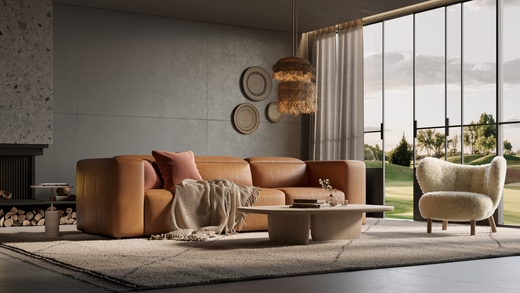
A recliner sofa asks more of its design than a standard sofa does — it has to look as polished sitting flat as it does fully reclined, and it has to hold up to moving parts working every day. If you're trying to find the best reclining sofa for your home, the decision comes down to a handful of practical questions: how it's built, how it reclines, and how well it actually fits your room.
Why Choose a Recliner Sofa
The appeal of a reclining sofa vs a regular sofa comes down to personalized comfort. Instead of one fixed seating position for everyone, each seat adjusts to how the person actually wants to sit — upright for conversation, fully reclined for a long movie night. Leather recliner sofas also tend to be easier to maintain day to day, since spills wipe clean rather than soaking in, and leather is generally a better choice for households managing allergies, since it doesn't hold dust and pet dander the way some fabric upholstery can.
Popular Recliner Sofa Styles
Recliner sofas come in a range of styles that fit different rooms and different households:
- Traditional tufted recliners — classic detailing that suits a more formal living room.
- Contemporary, sleek designs — clean lines and minimal detailing for a modern space.
- Sectional recliners — built for larger families or frequent hosting, with multiple reclining seats in one connected piece.
- Chesterfield-style recliners — deep tufting and rolled arms for a more classic, statement-making look.

Shop the look: Bain Leather Power Reclining Sofa — a clean, contemporary take on the power recliner, built for everyday comfort.
A Quick Primer on Leather Types
Leather quality varies more than most shoppers realize, and it's worth understanding the basic tiers before comparing recliner sofas:
- Top-grain leather — the layer just below the hide's outer surface, sanded and refinished for a consistent, durable look.
- Full-grain leather — the outermost, unaltered layer of the hide, prized for its natural texture and long-term durability.
- Bonded leather — a lower-cost material made from scrap leather fibers bonded together, generally less durable than top- or full-grain.
- Aniline and semi-aniline leather — dyed with soluble dyes rather than heavy pigmented coatings, giving a softer hand and more natural surface character.
This is general, industry-wide terminology worth knowing as you shop — it's a useful checklist regardless of which brand or piece you're considering.
Reclining Mechanism Types
How a sofa reclines matters as much as how it looks:
- Manual recline — a side lever or handle, simple and reliable with no power required.
- Power recline — a motorized mechanism, usually with a button or remote, that adjusts position smoothly and often includes multiple settings.
- Wall-hugger designs — built to recline with minimal clearance needed behind the sofa, a practical choice for smaller rooms.
- Lift-assist mechanisms — gently push the seat forward and up to help with standing, useful for households with mobility considerations.

Shop the look: Laurent Leather Power Reclining Sectional Sofa — power recline across a full sectional, built for larger households and frequent hosting.
Fitting a Recliner Sofa in Your Room
Before buying, measure your space with the sofa fully reclined in mind, not just its footprint at rest — reclining sofas need real clearance behind or beside them to extend fully, especially non-wall-hugger designs. It's also worth counting actual seats needed for your household, since a sectional recliner that seats six looks very different in a room built for four.
Caring for a Leather Recliner Sofa
- Wipe down regularly with a soft, dry or slightly damp cloth to remove dust and everyday buildup.
- Condition the leather every 6 to 12 months to keep it supple and prevent cracking over time.
- Keep the sofa out of direct, prolonged sunlight, which can dry out and fade leather faster than normal wear.
- Clean spills immediately with a soft cloth — leather handles quick action far better than a stain left to set.
Frequently Asked Questions
Why choose a reclining sofa over a regular sofa?
Each seat adjusts individually to how the person wants to sit — upright for conversation or fully reclined for a movie night — and leather recliners are easier to wipe clean and generally better for households managing allergies.
What's the difference between manual and power recline?
Manual recline uses a side lever or handle and needs no power, while power recline uses a motorized mechanism with a button or remote that adjusts position smoothly, often with multiple settings.
What leather types should I compare when shopping for a recliner sofa?
Top-grain leather (sanded and refinished for a consistent look), full-grain leather (the unaltered outer hide layer prized for durability), bonded leather (lower-cost, made from bonded scrap fibers), and aniline or semi-aniline leather (dyed with soluble dyes for a softer hand).
How do I make sure a reclining sofa fits my room?
Measure your space with the sofa fully reclined in mind, not just its footprint at rest, since non-wall-hugger designs need real clearance behind or beside them to extend fully.
Shop This Post
Whether you land on manual or power recline, a single seat or a full sectional, the best reclining sofa for your home is the one that matches how your household actually relaxes — and one built with materials and a mechanism that will still feel solid years from now.


