

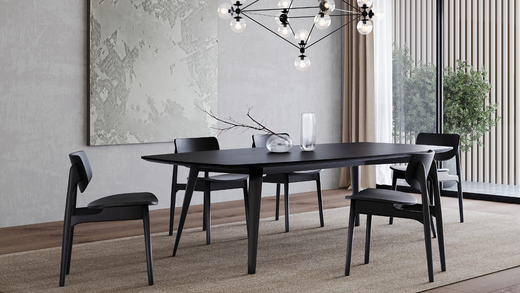
The dining table is where the most meaningful hours of a home actually happen — weeknight dinners, holiday gatherings, homework, and long conversations that run past dessert. Choosing the right one is less about finding a trend piece and more about finding the table that will hold up to real life while still feeling like the centerpiece of the room.
The Dining Table as Centerpiece
A dining table sets the tone for the whole room, so it's worth treating as a statement piece rather than an afterthought. Solid wood tops bring warmth and grain character that only improves with age, while stone or quartz tops offer a cooler, more architectural look with excellent everyday durability — both are legitimate directions, and the right one comes down to the feel you want the room to have.

Shop the look: Clemente Calacutta Quartz Dining Table — a stone top that brings architectural polish without sacrificing durability for everyday meals.
How to Choose a Dining Table: Size and Shape
Knowing how to choose a dining table starts with the room, not the table. A good dining table size guide comes down to a few practical measurements: leave roughly 36 to 42 inches (91 to 107 cm) of clearance around the table's edge so chairs can pull out fully and people can walk behind seated guests comfortably. Measure your space first, then shop to that number rather than falling for a table that looks great in a showroom but crowds your actual dining room.
The round vs rectangular dining table question comes down to both room shape and how you entertain. Round tables tend to suit smaller or square rooms well, since there are no corners to navigate and conversation flows more easily around a circle. Rectangular tables make better use of long, narrow rooms and are typically the easier choice when you want the flexibility of an extendable leaf for larger gatherings. Neither is universally "better" — it's a question of which one fits your room and how you actually use it.
Extendable Tables for Flexible Gathering Sizes
An extendable table is one of the most practical upgrades a dining room can get. It lets a table that comfortably seats a household of four or six expand to handle a holiday's worth of guests, without needing a second, larger table sitting unused most of the year. It's a small feature that solves a real, recurring problem.
Seating Comfort Matters As Much As the Table
Chairs get overlooked far more often than tables, but they're where comfort actually lives during a long meal. Ergonomic dining chairs — with proper back support and a seat height that matches the table — make the difference between a dinner guests want to linger at and one they're ready to leave. Mixing chair styles, like pairing upholstered chairs at the ends with wood chairs along the sides, is also a simple way to add visual interest without the room feeling mismatched.

Shop the look: Boucher Wood Dining Chair, Set of 2 — a comfortable, well-proportioned chair that pairs easily with both wood and stone-top tables.
Practical, Durable Designs for Everyday Use
A dining table needs to survive spilled sauces, hot dishes, and years of daily use — so practicality should weigh as heavily as looks. Look for finishes that resist scratching and staining, and hardware on any extendable mechanism that feels solid, not flimsy, when you test it.
Quick Tips for Dining in Style
- Prioritize flow and clearance. Leave enough room around the table for chairs and foot traffic — this matters more than most people expect.
- Choose a statement centerpiece. Let the table's material — wood grain or stone veining — do some of the visual work in the room.
- Layer texture. A table runner, a few candles, or a simple plant arrangement adds warmth without cluttering the surface.
- Pick adaptable pieces. Extendable tables and stackable or easily rearranged chairs make hosting far less stressful.
Frequently Asked Questions
How much clearance should I leave around a dining table?
Leave roughly 36 to 42 inches (91 to 107 cm) around the table's edge so chairs can pull out fully and people can walk behind seated guests comfortably.
Should I choose a round or rectangular dining table?
Round tables tend to suit smaller or square rooms since there are no corners to navigate, while rectangular tables make better use of long, narrow rooms and are typically easier to pair with an extendable leaf for larger gatherings.
What are the benefits of an extendable dining table?
An extendable table lets a table that comfortably seats four or six expand to handle a holiday's worth of guests, without needing a second, larger table sitting unused most of the year.
Why do dining chairs matter as much as the table?
Ergonomic dining chairs with proper back support and a seat height that matches the table make the difference between a dinner guests want to linger at and one they're ready to leave.
Shop This Post
The right dining table isn't just a piece of furniture — it's the setting for the meals and moments a home is actually built around. Choosing one with the right size, shape, and durability for how you really live pays off at every dinner that follows.


