

Inspiration

Swivel Chair Benefits: Why This Small Upgrade Makes a Big Difference
A swivel chair sounds like a small feature — a chair that rotates 360 degrees instead of staying fixed in one direction. In practice, that single feature changes how a room can be used far more than its size would suggest. Here's why it's worth considering, and where it makes the most sense. The Practical Benefit: One Chair, More Than One View A fixed chair or sofa faces one direction, permanently, unless you physically move it. A swivel chair removes that constraint entirely — you can turn to face a conversation, pivot toward a window view, or rotate toward the TV, all without repositioning the furniture itself. In a room that gets used for more than one purpose throughout the day, that flexibility is genuinely useful rather than a novelty. It means the room can adapt to what you're doing in the moment instead of you adapting to how the furniture happens to be arranged. Where Swivel Chairs Work Especially Well Swivel chairs earn their keep most in rooms that serve double duty. A living room that also functions as a reading nook is a good example: face the chair toward the sofa for conversation during the day, then turn it toward a window or a reading lamp in the evening. A chair placed near a window benefits from the same flexibility — turned outward, it's a spot to sit and look outside; turned back toward the room, it rejoins the seating arrangement without ever needing to be dragged across the floor. Shown: Auclair Bouclé Fabric 360° Swivel Chair Pairing a Swivel Chair With Fixed Seating One of the more underrated uses of a swivel chair is pairing it with a sofa or sectional that stays put. Rather than trying to build an entire seating arrangement out of pieces that all need to be repositioned for different activities, a fixed sofa can anchor the room while one or two swivel chairs flex around it — angled toward the sofa for a conversation, turned toward the TV for movie night, or rotated toward a game table for cards. It gives a room real flexibility without asking you to rearrange heavy furniture every time the use of the room changes. Paired with a substantial anchor piece like the Maestro 3 Seater Leather Sofa, a single swivel chair can flex between facing the sofa for conversation and facing the TV or a window, all without moving the sofa itself. Material and Style Options Swivel chairs come in enough materials and finishes that the feature doesn't lock you into one look. A bouclé swivel chair like the Auclair brings texture into a room, which is especially useful in a space with a lot of flat, neutral surfaces — it adds visual interest without adding another color to manage. A leather swivel base combines the rotation with the easy-care, long-wearing character of leather, which suits a chair meant to handle daily use rather than occasional lounging. A fabric swivel chair opens up the widest range of color options, which makes it a natural fit if the chair is meant to be an accent piece rather than a neutral supporting player in the room. Maintenance Is About the Material, Not the Swivel It's worth clearing up a common assumption: the swivel mechanism itself isn't a maintenance concern. A well-built swivel base is a simple, low-maintenance mechanical feature, no different in upkeep from the legs on any other chair. What actually determines how much care a swivel chair needs is the upholstery material chosen, exactly the same as it would be for a stationary chair — leather needs occasional conditioning, fabric benefits from regular vacuuming and prompt attention to spills, and bouclé should be treated the way any textured woven fabric would be. Choosing to swivel or not doesn't change any of that. A Few Placement Tips Worth Knowing Because a swivel chair depends on being able to actually rotate, it needs a bit more clearance around it than a fixed chair would in the same spot. Leaving enough open floor space on at least two or three sides lets the chair turn freely without bumping a side table or a lamp mid-rotation. It is also worth thinking about the two or three positions you expect to use most often, rather than treating the 360-degree range as something you will use constantly. Most people settle into a couple of favorite orientations, so it helps to make sure the chair looks and feels right in those specific positions, not just in the one it happens to be photographed in. Is a Swivel Chair Right for Your Room? If your living space serves more than one purpose, or if you have a chair positioned near a window, a fireplace, or a TV that competes for attention with the rest of the room, a swivel base solves a real problem rather than adding an unnecessary feature. It's a small mechanical difference that ends up affecting how naturally a room flows from one activity to the next. Frequently Asked Questions Does a swivel chair need to be positioned against a wall? No — in fact, a swivel chair works best with clearance on multiple sides so it can rotate freely. Positioning it a foot or more away from walls and neighboring furniture keeps the full range of motion usable. Are swivel chairs less stable than fixed chairs? A well-built swivel base is engineered to support the chair's full weight capacity just as securely as a fixed base; the mechanism only affects rotation, not stability while seated. Can a swivel chair replace a recliner? Not necessarily — swivel and reclining are two separate mechanical features. Some chairs combine both, but a standard swivel chair rotates without reclining, so if lounging with your feet up is the priority, check whether the specific model also offers a reclining function. What upholstery is easiest to maintain on a swivel chair? Leather and performance fabrics are generally the lowest-maintenance choices, since they resist stains and wipe clean easily. Textured fabrics like bouclé look and feel great but benefit from a bit more regular care, the same as they would on any stationary chair. Shop This Post Auclair Bouclé Fabric 360° Swivel Chair From $879 Shop Now → Maestro 3 Seater Leather Sofa From $1,509 Shop Now → Explore Finn & Form's swivel chair collection to find a piece — in bouclé, leather, or fabric — built to move with the way you actually use the room.
Learn more
How to Choose an Accent Chair for Your Space
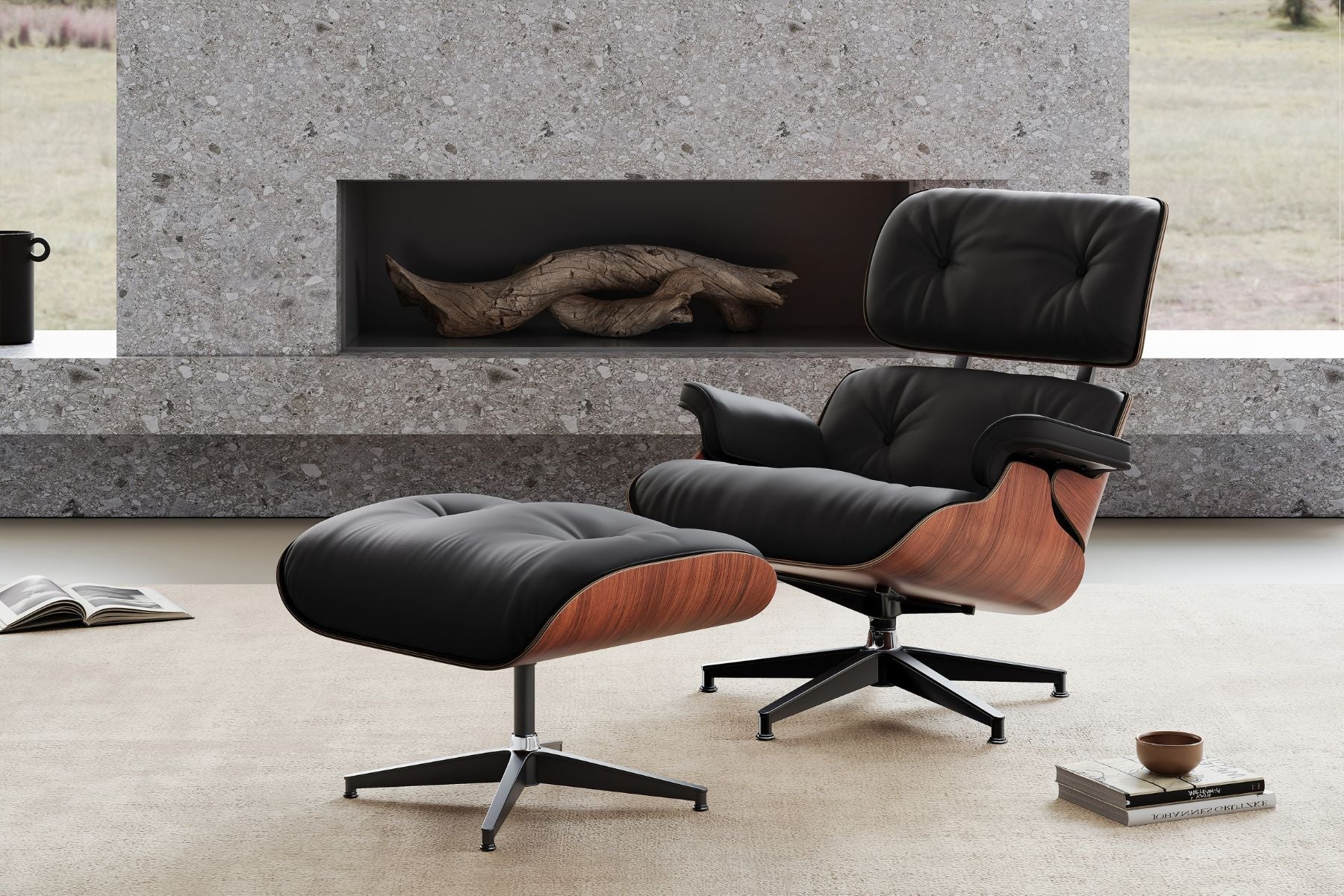
An accent chair has one job that's different from almost every other seat in your home: it's not there primarily for comfort or capacity, it's there to add visual interest. That single distinction changes how you should shop for one — and it's why an accent chair that "matches" your sofa perfectly often ends up looking flatter than one chosen to stand apart from it. Here's how to choose a chair that actually earns its place in the room. Accent Chair vs. Armchair: What's the Difference? These terms get used loosely, and there's no strict industry rule separating them, but the general distinction is useful to know when you're shopping. An armchair is typically thought of as an everyday-comfort seat — often part of a living room's main seating group, sized and cushioned for regular, extended use, similar in role to a sofa. An accent chair is usually chosen first for style and visual contrast, often smaller in scale, and used more as a design statement piece than a primary spot to sit for hours. In practice, a lot of chairs blur the line — a well-built accent chair can absolutely be comfortable enough for regular use — but thinking about which role you need first (comfort-focused everyday seat, or style-focused accent) will narrow your search considerably. Choose a Chair That Contrasts With Your Sofa, Not One That Matches It It's a common instinct to look for an accent chair in the same fabric family or color as the sofa, assuming it will look more "put together." In practice, the opposite is usually true. A room where every seat matches tends to read as flat and showroom-like, whereas a chair that contrasts — in material, color, or shape — creates a visual focal point and makes the whole seating arrangement look more deliberately composed. What Contrast Actually Means Contrast doesn't mean clashing. It means choosing a different material or tone that still belongs in the same overall palette — a leather accent chair opposite a fabric sofa, or a bouclé chair against a leather sectional. The goal is a chair your eye actually notices and rests on, rather than one that blends into the rest of the seating and disappears. Get the Scale Right for the Room Because an accent chair often sits somewhat apart from the main seating group — in a corner, next to a window, flanking a fireplace — its scale needs to work both against the room and against whatever it's paired with. A large, deep-seated lounge chair can overwhelm a small nook, while an undersized chair can look lost in a large, open room or beside a substantial sofa. As a general guide, measure the space you have in mind before shopping and look at a chair's actual width and depth dimensions rather than judging scale from a photo alone — proportion is much harder to gauge from images than it is from a tape measure. Leather, Fabric, or Bouclé: Where Each Fits Material is one of the fastest ways to set the tone of an accent chair, and each option tends to suit a slightly different role in a room. Leather for a Grounded, Structured Statement A leather accent chair — particularly a lounge chair paired with a matching ottoman — brings a more structured, tailored look and tends to work well as a standalone design statement, especially opposite a fabric or bouclé sofa. Leather also tends to be a practical choice for a chair that will see genuinely regular use, since it holds up well to daily contact. Shown: Aria Leather Lounge Chair & Ottoman Fabric for Warmth and Softer Color A fabric accent chair opens up a much wider range of colors and patterns than leather typically offers, which makes it a good option when you want the chair to introduce a specific tone or softness into the room — a muted sage, a warm terracotta, or a soft neutral that leather can't easily replicate. Fabric also tends to feel slightly more casual and approachable, which can suit a bedroom corner or a family room better than a more formal leather piece. Shown: Beatrice Fabric Accent Chair Bouclé for Texture-First Rooms A bouclé accent chair leans into texture rather than color or shape as its main visual interest, which makes it a strong fit for quieter, neutral-toned rooms where you want richness without introducing a bold pattern or saturated color. It tends to suit lighter, occasional-use spots best, since the looped texture isn't built for the heaviest daily wear. Where to Place an Accent Chair Placement is where an accent chair's purpose really comes through — it's rarely meant to be the default seat in the room, but rather a considered addition to a specific spot. A Reading Nook A single accent chair near a window or a good reading light, positioned slightly apart from the main seating group, creates a dedicated spot for a quieter activity and makes use of a corner that might otherwise go unfurnished. Flanking a Fireplace A pair of accent chairs on either side of a fireplace is one of the most classic placements, framing the fireplace as a focal point and creating a secondary, more intimate seating arrangement separate from the main sofa. A Bedroom Corner An accent chair in an underused bedroom corner adds a place to sit while getting dressed or reading before bed, and it's often the single easiest way to make a bedroom feel more finished without adding a large piece of furniture. Frequently Asked Questions What's the difference between an accent chair and an armchair? An armchair is generally an everyday-comfort seat sized for regular, extended use as part of the main seating group, while an accent chair is chosen first for style and visual contrast and used more as a design statement piece. Should an accent chair match my sofa? Not necessarily. A chair that contrasts in material, color, or shape usually creates a stronger focal point than one that matches the sofa exactly, since an all-matching room can read as flat and showroom-like. How do I get the scale right for an accent chair? Measure the specific spot you have in mind and check the chair's actual width and depth dimensions rather than judging scale from a photo, since a chair that's right for a large room can look lost in a small nook and vice versa. Which material should I choose — leather, fabric, or bouclé? Leather suits a structured, tailored statement and holds up well to regular use; fabric opens up more color and pattern options and feels more casual; bouclé adds texture for quieter, neutral-toned rooms best suited to lighter, occasional use. Shop This Post Aria Leather Lounge Chair & Ottoman From $1,079 Shop Now → Beatrice Fabric Accent Chair From $840 Shop Now → Making the Final Choice Choosing an accent chair comes down to being clear about its job in the room: contrast rather than match your existing seating, get the scale right for the specific spot you have in mind, and pick a material — leather, fabric, or bouclé — that fits both the look and the amount of daily use it will realistically get. Browse our full range of accent chairs to find a piece that adds the right contrast and texture to your space.
Learn more