

A living room works when it does two things at once: it looks considered, and it holds up to the life actually lived in it. That balance — style without stiffness, comfort without clutter — is the whole game of modern living room design. Below are ten ideas that focus less on trends and more on the decisions that make a room feel both elevated and easy to use every single day.
1. Start With Layout, Not Décor
Before choosing a single fabric or finish, figure out how the room needs to function. Is it a space for entertaining, for quiet evenings, for a mix of both? Furniture arrangement should follow use: pull seating away from the walls to create a real conversation area, angle chairs slightly toward each other rather than lining everything up in a row, and make sure there's a clear walking path from the entry to the main seating zone. A modern living room feels intentional because the layout was decided first — everything else is built around it.
It helps to think in zones rather than a single arrangement. A larger living room might hold a primary conversation area anchored by the sofa, a secondary reading nook near a window, and a console for storage near the entry. Smaller rooms benefit from committing fully to one zone rather than trying to squeeze in several half-finished ones. Either way, the goal is the same: a layout that supports how people actually move through and use the space, not just how it photographs from the doorway.
2. Choose One Anchor Piece and Build Around It
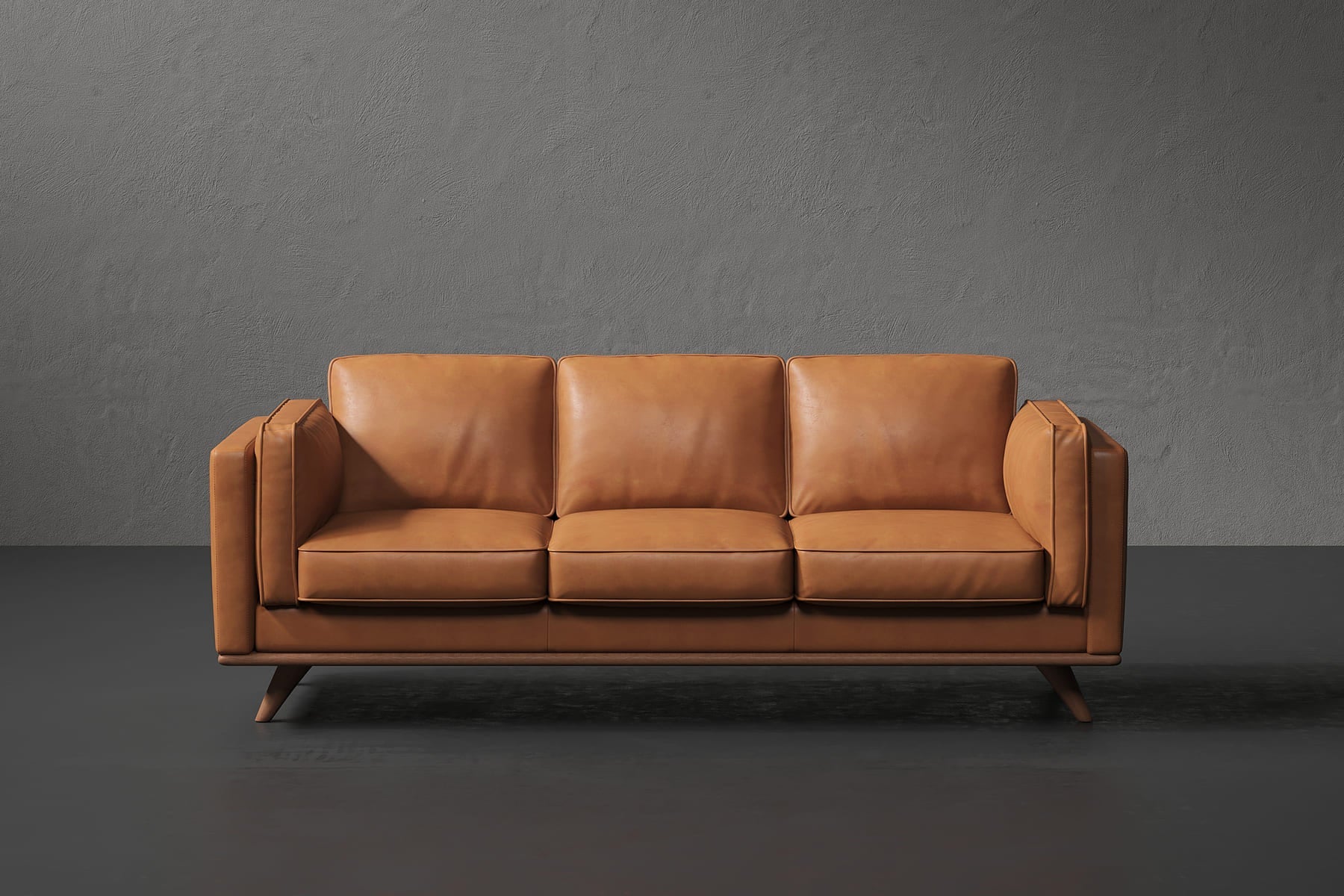
Every well-designed room has a piece that sets the tone — usually the sofa. Instead of treating it as one item on a shopping list, treat it as the decision that everything else responds to: the rug size, the coffee table proportions, the wall color. A well-proportioned leather sofa, for instance, brings warmth and structure at the same time, and its silhouette can dictate whether the rest of the room leans streamlined or relaxed.

Shown: Maestro 3 Seater Leather Sofa
3. Build a Palette Around Three Tones
Modern living rooms often read as calmer than their traditional counterparts because the palette is disciplined. A simple approach: pick a neutral base (warm white, greige, soft charcoal), a mid-tone anchor (walnut wood, a muted sage, deep espresso leather), and one accent you allow to repeat in small doses — a brass lamp, a rust throw pillow, a black-framed piece of art. Three tones, repeated consistently, read as curated. Ten competing colors read as cluttered no matter how nice each one is individually.
4. Mix Textures the Way You'd Mix Flavors
Color gets most of the attention, but texture is what makes a room feel finished in photos and even better in person. Pair a smooth leather sofa with a nubby wool rug, a woven basket for throws, and a matte-finish coffee table. The contrast between soft and hard, matte and polished, is what keeps a neutral room from feeling flat. If everything in the room has the same sheen and the same texture, even a beautiful piece of furniture can disappear into the background.
5. Layer Lighting Instead of Relying on One Fixture
A single overhead light does one job: it lights the room evenly and flatly. A modern living room needs at least three light sources working together — an ambient source (ceiling fixture or recessed lighting), a task source (a reading lamp beside the sofa), and an accent source (a floor lamp in a corner, or LED strip lighting behind a shelf). Layered lighting lets you shift the mood of the same room from bright and functional during the day to warm and relaxed in the evening, without touching the furniture at all.
Dimmers Are Worth the Small Investment
If there's one upgrade that changes a room's feel more than almost anything else, it's a dimmer switch on the main fixture. It costs little and instantly gives a modern living room the flexibility to go from daytime-functional to evening-ambient.
6. Let the Coffee Table Do More Than Hold Coffee
A coffee table is one of the few surfaces in a living room guests actually interact with directly, so it's worth choosing with intention rather than as an afterthought. A stone or marble top brings a cool, refined texture that contrasts beautifully with a leather sofa and a wool rug, while still being practical enough for daily use — coasters optional, but appreciated.

Shown: Kaplan Simplicity Carrara Marble Coffee Table
7. Give Every Piece Breathing Room
Modern design leans on negative space as much as it leans on the furniture itself. A room that's fully packed — every wall lined, every corner filled — reads as busy even if each piece is beautiful. Leave visible floor between furniture groupings, keep at least one wall relatively bare, and resist the urge to fill every surface with objects. The eye needs somewhere to rest, and that's often what separates a "nice room" from a "designed room."
8. Use One Statement Piece, Not Five
It's tempting to make every element a showpiece, but a room with one strong statement — a sculptural chair, a bold piece of art, a striking pendant light — reads as more sophisticated than a room where everything competes for attention. Choose the one piece you genuinely love and let the rest of the room support it quietly.
9. Prioritize Comfort as a Design Decision, Not an Afterthought
A living room that looks perfect in photos but that no one wants to actually sit in has failed at its primary job. Seat depth, cushion firmness, and armrest height matter just as much as silhouette — test how a sofa feels for the kind of use it will get, whether that's an hour of reading or a full evening with friends. Comfort and style aren't opposing goals; the best modern furniture is designed so you don't have to choose.
10. Edit Ruthlessly Before You Add
The single fastest way to make any living room feel more modern is to remove things, not add them. Walk the room and ask, honestly, whether each object is earning its place. A smaller number of well-chosen pieces — a great sofa, a considered coffee table, one lighting moment, a rug that ties it together — will always read as more polished than a room crowded with good intentions.
Small Rooms vs. Large Rooms
The same principles scale differently depending on square footage. In a compact space, a sofa with exposed, tapered legs will read as lighter and more open than a boxy, skirted design, and a glass or lighter-toned coffee table will keep sightlines open. In a larger room, don't be afraid of scale — an oversized sectional or a substantial stone coffee table can actually make a big room feel grounded rather than empty. Matching furniture scale to room size is one of the most overlooked parts of getting a modern living room right.
Frequently Asked Questions
What's the fastest way to make a living room feel more modern?
Remove things rather than add them. Editing down to a smaller number of well-chosen pieces — a great sofa, a considered coffee table, one lighting moment, and a rug that ties it together — reads as more polished than a room crowded with good intentions.
How many colors should a living room palette use?
Aim for three tones: a neutral base (warm white, greige, or soft charcoal), a mid-tone anchor (walnut wood, muted sage, or deep espresso leather), and one accent repeated in small doses, like a brass lamp or a rust throw pillow. Repeated consistently, three tones read as curated, while ten competing colors read as cluttered.
How many light sources does a modern living room need?
At least three, working together: an ambient source such as a ceiling fixture or recessed lighting, a task source like a reading lamp beside the sofa, and an accent source such as a floor lamp or LED strip lighting. Layering lets you shift the room's mood from bright and functional in the day to warm and relaxed in the evening.
How do I make a small living room feel bigger?
Choose a sofa with exposed, tapered legs instead of a boxy, skirted design, and pick a glass or lighter-toned coffee table to keep sightlines open. In larger rooms, the opposite applies — don't be afraid of scale, since an oversized sectional or substantial stone coffee table can make a big room feel grounded rather than empty.
Shop This Post
Bringing It Together
None of these ideas require a full renovation. Most living rooms improve dramatically just by rethinking layout, editing down, and choosing a small number of pieces that are built to be lived with, not just looked at. If you're starting that process, browse Finn & Form's Living Room collection for pieces designed around exactly this balance of comfort and craft, or explore the Sofas & Loveseats collection if the seating is where you want to start.


